2026 Best Touch Screen Technologies for Global Buyers?
The world of touch screen technology is evolving rapidly. For global buyers, keeping up with the latest innovations is crucial. Touch screens are everywhere now, from smartphones to large kiosks. They enhance user experience and boost engagement across various sectors.
As we look ahead to 2026, new touch screen technologies promise even greater functionality. From advanced displays to improved touch sensitivity, these innovations are key for businesses. However, not all options are suited for every application. Buyers need to consider their specific needs carefully.
Choosing the right touch screen technology can be challenging. With many choices available, it's easy to feel overwhelmed. Companies must balance price, quality, and features. To make informed decisions, understanding these factors is essential. This landscape is constantly changing, and buyers must stay informed to succeed.
2026 Touch Screen Market Overview: Key Trends and Growth Projections
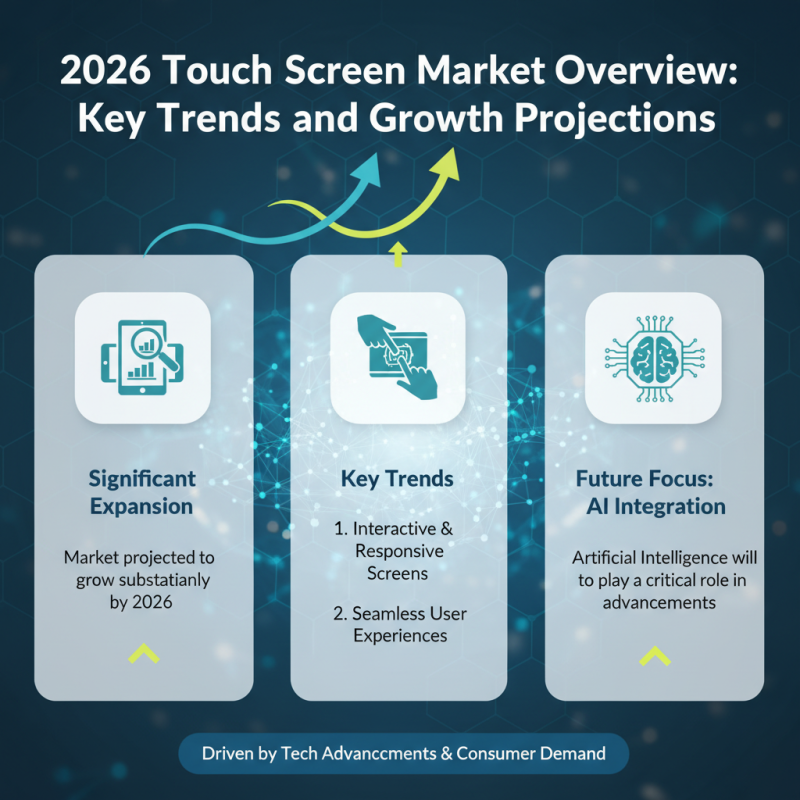
The touch screen market is projected to expand significantly by 2026. This growth is driven by advancements in technology and increasing consumer demand. Key trends indicate a shift towards more interactive and responsive screens. Users now expect touch screens that offer seamless experiences. The integration of artificial intelligence will also play a critical role.
Emerging sectors like healthcare and education are likely to adopt these technologies. Touch screens in medical devices enhance patient interaction. In classrooms, they foster collaborative learning environments. However, some challenges remain. Ensuring durability and reliability in diverse settings is essential. Manufacturers must continuously improve screen resilience.
Sustainability is becoming a focal point in this industry. Buyers are looking for eco-friendly materials and energy-efficient solutions. It's crucial for companies to address these concerns. Balancing innovation with environmental responsibility creates a complex path forward. Adapting to these demands requires ongoing reflection and a willingness to evolve.
Leading Touch Screen Technologies: Capacitive, Resistive, and More
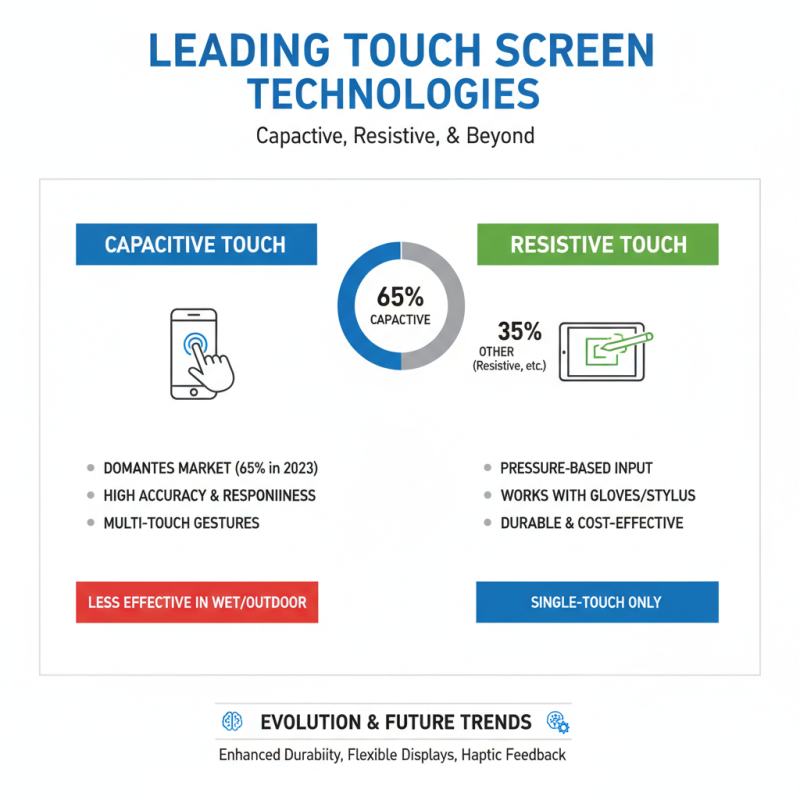
Touch screen technologies have evolved significantly, with major choices like capacitive and resistive methods capturing global markets. Capacitive screens dominate due to their accuracy and responsiveness, accounting for over 65% of the touch screen market in 2023, according to recent industry reports. This technology allows multi-touch functionalities, essential for modern applications. However, while they perform well in user-friendly environments, they can be less effective in wet or outdoor settings.
On the other hand, resistive touch screens provide durability and reliability in various conditions. They are widely used in industrial applications, where harsh environments present challenges. Despite representing about 25% of the market share, resistive screens face limitations in multi-touch capabilities. Users often find these screens less intuitive as they require pressure to register touch. This trade-off raises questions about usability in different contexts, especially when precision is paramount. Understanding these nuances is vital for global buyers seeking the best touch screen technologies for their specific needs.
Major Applications of Touch Screens: From Smartphones to Kiosks
Touch screen technology has transformed various industries. Its applications range from everyday devices to specialized kiosks. In smartphones, touch screens allow for intuitive navigation. Users can scroll, zoom, and select features effortlessly. The feedback is immediate, creating a seamless interaction. This is crucial for maintaining user engagement.
Kiosks in public spaces illustrate another major use. Airports, malls, and museums utilize touch screens for information retrieval. People can check flight statuses or explore exhibitions with just a tap. However, these systems sometimes struggle with responsiveness. Long wait times can lead to frustration. Additionally, touch surfaces are often unclean. This highlights the need for better hygiene protocols in public areas.
Emerging trends suggest further innovations in touch technology. Expect to see advancements in responsiveness and sensitivity. This could lead to more interactive educational tools. However, there remains a risk of over-reliance on these systems. Users might overlook traditional methods of information access. Balancing technology with practicality is essential for future applications.
2026 Best Touch Screen Technologies Overview
This chart represents the major applications of touch screen technologies across different sectors as of 2026. The data shows the percentage of usage in various industries, illustrating how prevalent touch screen technology has become in daily applications.
Consumer Preferences in Touch Screen Design: Size, Sensitivity, and Usability
When it comes to touch screen design, consumer preferences are crucial. Users often desire bigger screens for enhanced visibility. However, larger displays can alter the user interface. Balancing size and accessibility is key. A screen that is too large may become unwieldy.
Sensitivity is another important factor. Many users expect quick responses from touch screens. A slow or unresponsive screen can lead to frustration. Haptic feedback can improve user experience. However, too much feedback can feel overwhelming. Designers must find a sweet spot that satisfies user needs.
Usability is paramount in touch screen technology. Intuitive designs can make or break the user experience. Features like gesture control are popular but can add complexity. Some users may struggle to adapt to new systems. Testing with real users is essential. Continuous feedback can help refine designs. The evolution of touch screen technology demands ongoing reflection and adjustment.
2026 Best Touch Screen Technologies for Global Buyers
| Technology |
Screen Size (inches) |
Sensitivity (g) |
Usability Score (1-10) |
| Capacitive Touch |
7 |
0.5 |
9 |
| Resistive Touch |
5 |
2.0 |
7 |
| Infrared Touch |
10 |
N/A |
8 |
| Optical Touch |
15 |
N/A |
7 |
| Multi-Touch |
12 |
0.3 |
10 |
Future Innovations in Touch Screen Technology: AI Integration and Beyond
The future of touch screen technology is vibrant, especially with AI integration. By 2026, the global touch screen market is expected to reach a staggering $66 billion, according to industry reports. This growth is partly driven by advancements in artificial intelligence, enhancing the user experience across devices. AI can personalize interactions, making touchscreens more intuitive.
Sensors with machine learning capabilities will shift how users engage with devices. Imagine a screen that adapts to your touch pressure or understands voice commands seamlessly. Current data show that 75% of users prefer devices using AI for more responsive interactions. However, challenges remain in creating consistent performance in varied conditions.
Some manufacturers struggle with integrating AI smoothly. This raises questions about reliability and performance. The balance between innovation and user-friendly design is delicate. Developers need to prioritize durability and responsiveness while embracing cutting-edge technologies. Moving forward, the industry must address these issues to fully realize the potential of integrated solutions.



















 Screen Size Calculator