How to Choose the Best Display Screen for Your Business?
Choosing the right display screen can significantly impact your business. Industry expert Dr. Emily Chen, a recognized authority in display technology, once stated, "The right display screen enhances communication and engagement in any setting." This highlights the importance of selecting a display that fits both your needs and objectives.
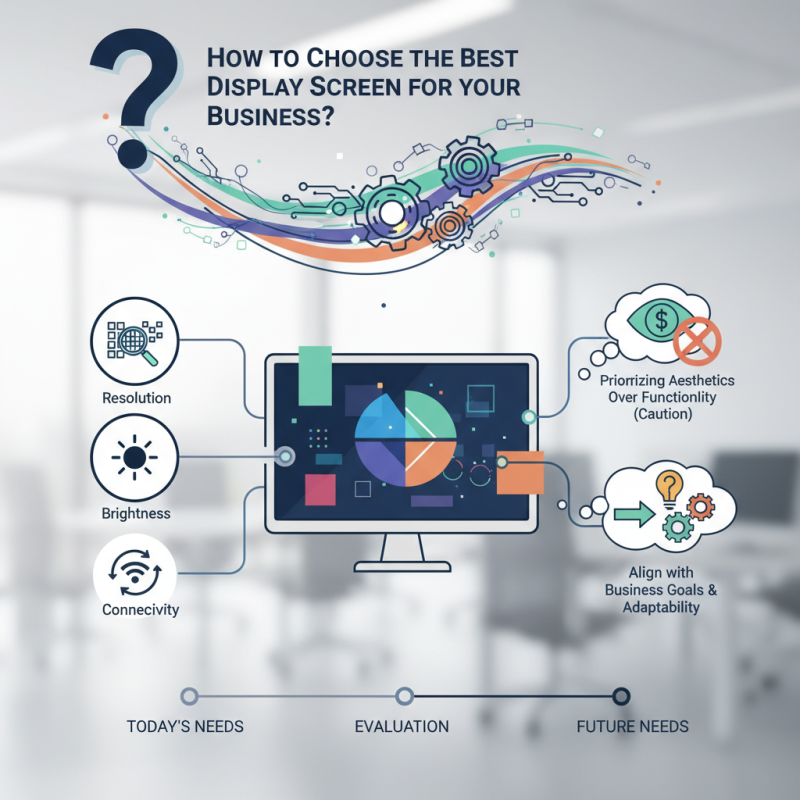
In today’s market, display screens come in various types and sizes. Factors such as resolution, brightness, and connectivity should be considered. A high-resolution screen can captivate customers, while a bright display is essential in well-lit environments. However, the right choice often requires careful evaluation and may differ from trends.
Many businesses face challenges when navigating these options. It is easy to prioritize aesthetics over functionality. Reflect on your vision—what works today might not work tomorrow. The key is to align your choice with business goals while remaining adaptable to future needs.
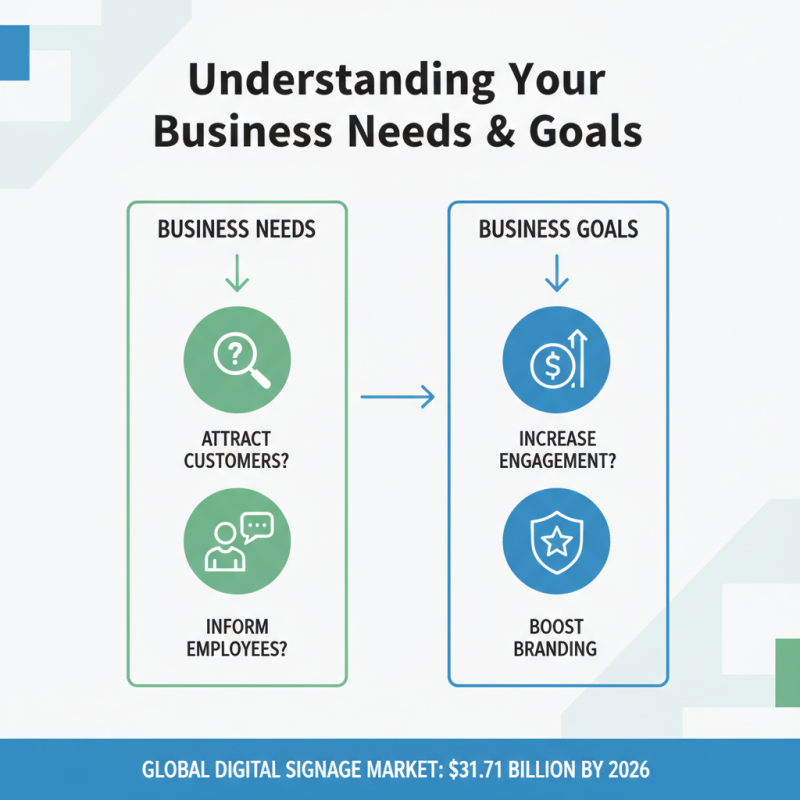
Understanding Your Business Needs and Goals
When selecting a display screen for your business, understanding your needs is crucial. A study by MarketsandMarkets suggests that the global digital signage market will reach $31.71 billion by 2026, driven by increased engagement and branding. Knowing your objectives will help you choose the right screen. Are you aiming to attract customers or inform employees? Each goal requires different features.
Tips: Define your primary audience. Consider whether they prefer bright colors or concise information. Research shows that 80% of consumers remember where they saw a digital sign, emphasizing the importance of visual appeal.
Take into account the environment. Indoor screens often have different specifications than outdoor ones. For instance, outdoor displays should be weather-resistant and have high brightness levels. According to a report from Statista, outdoor advertising spend reached $8.6 billion in 2021. Poor visibility can waste investments.
Tips: Measure the viewing distance and adjust screen size accordingly. Your investment's return depends on proper placement and functionality. Addressing these factors can guide your decision-making process.
Evaluating Different Types of Display Screens
When evaluating different types of display screens for your business, it's essential to consider various factors. Each type offers unique benefits and drawbacks. For instance, LED screens are energy-efficient and provide bright visuals, making them ideal for outdoor advertising. However, their cost can be a significant hurdle for small businesses. LCD screens offer great color accuracy and are often more affordable. But they might struggle with visibility in direct sunlight.
Touchscreen displays are increasingly popular for interactive experiences. They enhance customer engagement, yet the technology can be less durable over time. A common oversight is neglecting the intended environment for the display. For example, screens in high-traffic areas may require additional protection. Additionally, the resolution plays a critical role in viewer experience. High-definition screens draw attention but can incur extra costs. Balancing quality and budget is vital.
Consider the installation method as well. Wall-mounted screens save space, while freestanding options provide flexibility. However, installation can be more complex with larger displays. Gathering feedback from employees can also provide insight. Often, a screen that looks perfect on paper might not meet real-world needs. Assessing the practical applications and limitations of each type ensures a better fit for your business.
Assessing Screen Size and Resolution Requirements
When selecting the display screen for your business, focusing on screen size and resolution is crucial. The right size depends on the space and purpose. For small offices, a compact screen may suffice. In larger areas, a bigger display ensures visibility from a distance.
Resolution plays a vital role in image clarity. Higher resolution means sharper images, which is essential for presentations or graphics. A screen with 4K resolution offers detailed visuals. However, consider your content quality. If you mainly use basic graphics, ultra-high resolution may be unnecessary.
Tips: Always test your screen in the intended environment. Are there any lighting issues? Will glare affect visibility? Don’t overlook the importance of ergonomics. Screens should be at eye level to prevent strain. Evaluate these aspects carefully to make a well-informed decision.
Screen Size and Resolution Requirements for Business Displays
Considering Environmental Factors and Placement
Choosing the right display screen for your business involves careful consideration of environmental factors. Imagine a busy cafe with bright sunlight streaming through the windows. In such a setting, screens can easily become washed out and hard to read. Opting for a high-brightness display can enhance visibility in these conditions. Screens that can adjust brightness automatically help in different lighting scenarios, making them practical for outdoor or well-lit areas.
Placement is equally critical. A screen positioned too high or low can strain customers' necks. Think about ergonomics and sightlines when placing screens. Avoid placing displays where reflections from windows or lights can interfere. It's important to envision how customers interact with your space. If a screen is hard to see from certain angles, it loses effectiveness. Regularly reassess the positioning as the environment changes, like the seasons or renovations.
Achieving the perfect display environment may require a few adjustments. You might need to experiment with different screen placements before settling on the best option. Each change offers a chance to enhance user experience and engagement. Reflection on those adjustments is vital, as it leads to better decisions in the long run.
Budgeting for Quality and Long-term Investment
Budgeting for quality display screens is essential for any business. A well-chosen display can enhance communication and attract customers. However, the initial cost often intimidates businesses. Investing in high-quality screens means fewer replacements and repairs over time. This decision can provide better long-term value.
Consider the specific needs of your environment. Do you need bright displays for outdoor use? Are touch capabilities necessary? Answering these questions can help focus your budget effectively. Allocate funds not just for the screens, but also for installation and maintenance. Sometimes, spending more upfront leads to savings later.
Reflecting on previous purchases can be insightful. Did lower-priced screens break too fast? Did they lack features? Such experiences shape future decisions. Businesses thrive when they learn from past investments. Quality should be a priority. Be aware of the temptation to minimize costs now, which can lead to greater losses down the line.
How to Choose the Best Display Screen for Your Business? - Budgeting for Quality and Long-term Investment
| Screen Type |
Resolution |
Size (inches) |
Price Range ($) |
Lifespan (years) |
Ideal Usage |
| LED |
1920x1080 |
24-32 |
200 - 500 |
5-10 |
Office/Conference Room |
| OLED |
3840x2160 |
55-65 |
1000 - 3000 |
4-8 |
Creative/Design Work |
| LCD |
1920x1080 |
19-27 |
150 - 400 |
5-10 |
General Use |
| Touchscreen |
1920x1080 |
22-50 |
300 - 800 |
3-7 |
Interactive Displays |
| Projection |
1920x1080 |
Varies (up to 200) |
500 - 1500 |
2-5 |
Presentations/Events |




















 Screen Size Calculator