How to Choose the Best Outdoor Monitor for Your Needs?
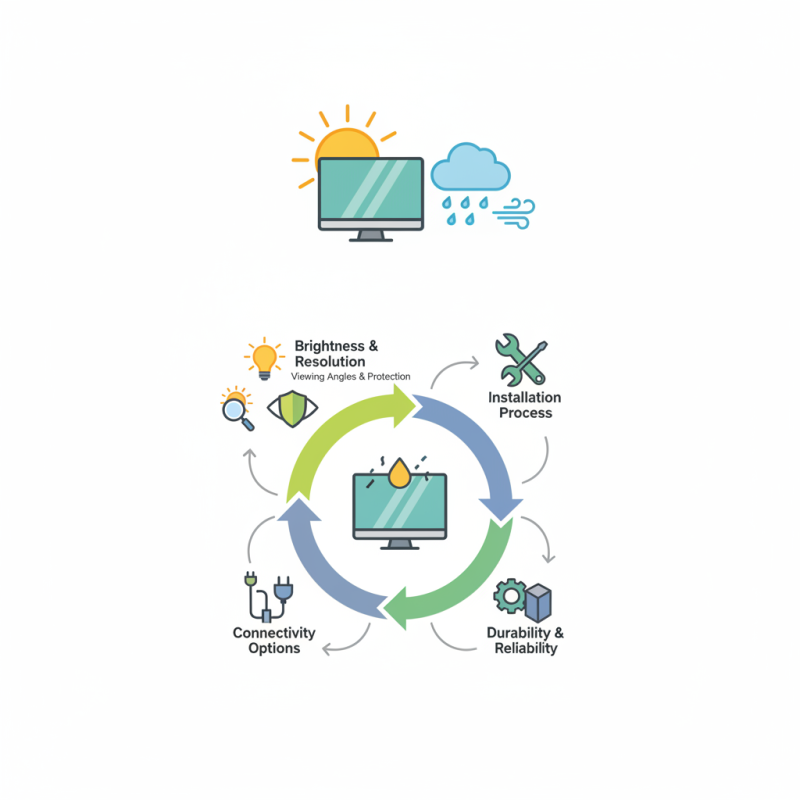
Choosing the right outdoor monitor can significantly enhance your experience in various settings. Whether for business or leisure, the right choice matters. An outdoor monitor should withstand elements like rain, sun, and wind. You want durability and reliability.
When selecting an outdoor monitor, consider your needs carefully. Think about brightness levels and resolution. High visibility is essential for sunny days. Also, look into viewing angles and protective features. It can be frustrating when screens glare or become unreadable.
Don’t overlook the installation process and connectivity options. Complicated setups can deter you from using your monitor effectively. Reflect on these factors to ensure you make the best decision. An outdoor monitor can be a fantastic addition, but it requires thoughtful consideration.
Understanding the Different Types of Outdoor Monitors Available
When choosing an outdoor monitor, it’s essential to understand the different types available on the market. You can find various models tailored for specific environments. Weather-resistant options are great for rainy days. Sunlight-readable monitors excel in bright conditions. Consider where you will use it most.
Tips: Think about your primary location. If you’re in a sunny area, prioritize brightness levels. For shaded areas, durability becomes more important. Look into temperature ranges as well. Some displays may not perform well in extreme heat or cold.
Also, consider the mounting options. Wall-mounted versions can save space but may require professional installation. Portable monitors can be versatile, but they may need more protection from the elements. Assess your user needs carefully. A balance between quality and budget is crucial. Every feature comes with a trade-off.
Key Features to Consider When Choosing an Outdoor Monitor
Choosing the right outdoor monitor can be challenging. The right features make a significant difference. First, look for brightness levels. A monitor with high brightness ensures visibility in direct sunlight. Aim for a brightness of at least 2500 nits.
Next, consider the weather resistance. Monitors must withstand rain, snow, and extreme temperatures. Check the IP rating. An IP65 rating means the monitor is dust-tight and protected from water jets. This feature is crucial for outdoor environments.
Another important factor is the viewing angle. A wider angle provides better visibility from different positions. A 178-degree angle is ideal for outdoor use. Also, consider connectivity options. Ensure compatibility with devices you plan to use. This could prevent frustration later. Reflect on your specific needs before making a decision. Every feature should align with your environment and usage.
How to Choose the Best Outdoor Monitor for Your Needs? - Key Features to Consider When Choosing an Outdoor Monitor
| Feature |
Description |
Importance |
Recommended Value |
| Brightness |
Measured in nits, this indicates how bright the display can get to remain visible in bright outdoor conditions. |
High |
2500 nits or higher |
| Weather Resistance |
The monitor should have an IP rating indicating its resistance to water and dust. |
High |
IP65 or higher |
| Temperature Range |
The operational temperature range indicates the conditions under which the monitor can function effectively. |
Medium |
-20°C to 60°C |
| Screen Size |
The diagonal measurement of the screen. Affects visibility and user engagement. |
Medium |
32 inches or larger |
| Resolution |
Pixel resolution affects image sharpness and detail. |
High |
1920 x 1080 or higher (Full HD) |
| Connectivity Options |
Includes HDMI, USB, Ethernet, etc. Better connectivity allows for easier integration. |
Medium |
Multiple options including HDMI and Wi-Fi |
| Viewing Angle |
The maximum angle at which the display can be viewed without losing clarity. |
High |
178 degrees or better |
Evaluating Brightness and Display Quality for Outdoor Environments
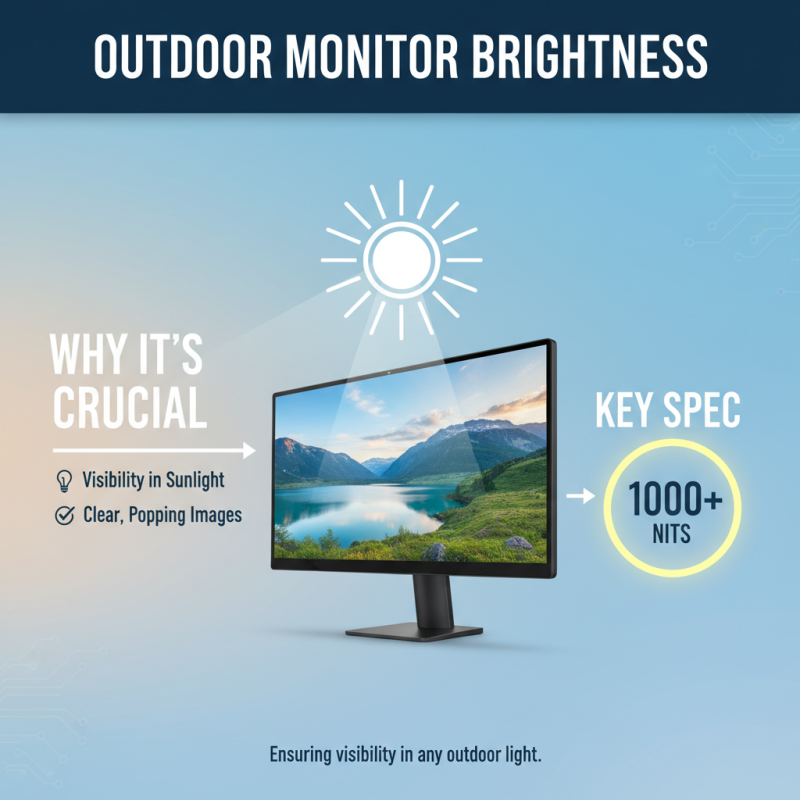
When choosing an outdoor monitor, brightness is crucial. Outdoor environments often have varying light conditions. A bright display ensures visibility, even in direct sunlight. Look for monitors with at least 1000 nits of brightness. This brightness can help images pop and remain clear outdoors.
Tips: Test the monitor in natural light. See how the colors appear under sunlight. Adjusting settings may improve visibility. Also, consider anti-glare screens. They can reduce reflections and improve clarity.
Display quality matters as well. Resolution and color accuracy impact your viewing experience. Higher resolution means sharper images, which is essential for detailed presentations. Color reproduction is equally vital. Monitors should display colors accurately to attract viewers.
Tips: Inspect the monitor’s color gamut. A wider gamut means more vibrant colors. Also, review viewing angles. You want consistency from various positions. Don’t overlook build quality; it must withstand outdoor conditions.
Assessing Durability and Weather Resistance of Outdoor Monitors
When choosing an outdoor monitor, durability and weather resistance are key factors to consider. Outdoor environments can be harsh. Rain, snow, extreme temperatures, and dust can quickly damage unprotected electronics. Look for monitors built with strong, protective casings. These materials should resist water and dust ingress. Ensure the display can withstand temperature fluctuations. It should perform well in hot summers and cold winters.
UV exposure is another concern. Prolonged sunlight can harm a monitor’s screen. Some displays come with anti-glare coatings to improve visibility. A well-rounded choice balances brightness and contrast. A brighter screen is vital for viewing in direct sunlight. Pay attention to the IP rating. A rating of IP65 or better suggests good protection against water and dust. However, even with a high rating, consider a sheltered installation for extra safety.
Testing is also essential. Real-world conditions can be unpredictable. What looks durable on paper might not hold up in practice. User reviews often reveal hidden weaknesses and strengths. Take time to reflect on these details before making a choice. Ultimately, the right outdoor monitor should meet both your functional needs and withstand the elements effectively.
Durability and Weather Resistance of Outdoor Monitors
Reviewing Connectivity Options for Outdoor Monitors and Compatibility
When choosing an outdoor monitor, connectivity options are crucial. Different environments require varied solutions. A monitor with Wi-Fi capability may work best in areas with strong signals. If wireless is unreliable, consider a wired connection. Ethernet offers more stability. Studies show that stable connections can improve customer satisfaction by 30%.
Compatibility is another important factor. Ensure your outdoor monitor can integrate with existing systems. HDMI and DisplayPort inputs are standard. Many devices rely on these connections. According to recent reports, over 70% of users experience issues due to compatibility problems. This can lead to frustration and wasted time.
Keep the environment in mind too. Larger monitors may need multiple inputs for seamless operation. Bright sunlight can affect visibility and connectivity. If your monitor experiences interference from weather conditions, rethink your choice. Evaluate both performance and reliability before making a decision.





















 Screen Size Calculator