How to Choose the Best Transparent LED Screen for Your Needs?
Choosing the right transparent LED screen can be challenging. With various options available, understanding what suits your specific needs is essential. A transparent LED screen can enhance visual engagement while maintaining an open atmosphere. However, not all screens are created equal.
Consider factors like resolution and brightness. A high-resolution display can attract attention and enhance clarity. Brightness impacts visibility in different lighting conditions. Think about the environment where the screen will be used. Will it be outdoors in direct sunlight or indoors in a dimly lit space?
Also, reflect on your application's purpose. Is it for advertising, art display, or a unique showcase? Each use case may require different features. Take the time to evaluate your options. This is not a simple choice. A transparent LED screen can be a significant investment, so make a decision that aligns with your vision.
Factors to Consider When Selecting Transparent LED Screens
When selecting transparent LED screens, various factors will significantly influence your choice. Firstly, consider the transparency level. Reports indicate that screens with over 75% transparency can enhance visibility while maintaining design aesthetics. This makes them suitable for applications like retail displays and architectural installations. Additionally, screen resolution is crucial. Higher pixel density can provide clearer images, especially for detailed graphics. A resolution of at least 1080p is recommended for optimal clarity.
Another essential factor is brightness. Transparent LED screens typically need to compete with ambient light. Industry data suggest that screens with a brightness of around 4,000 nits are effective in well-lit environments. You should also consider the environment where the screen will be installed. Indoor and outdoor settings require different specifications, both in terms of durability and protection from elements.
Tip: Always evaluate your installation site. Consider factors such as foot traffic and lighting conditions.
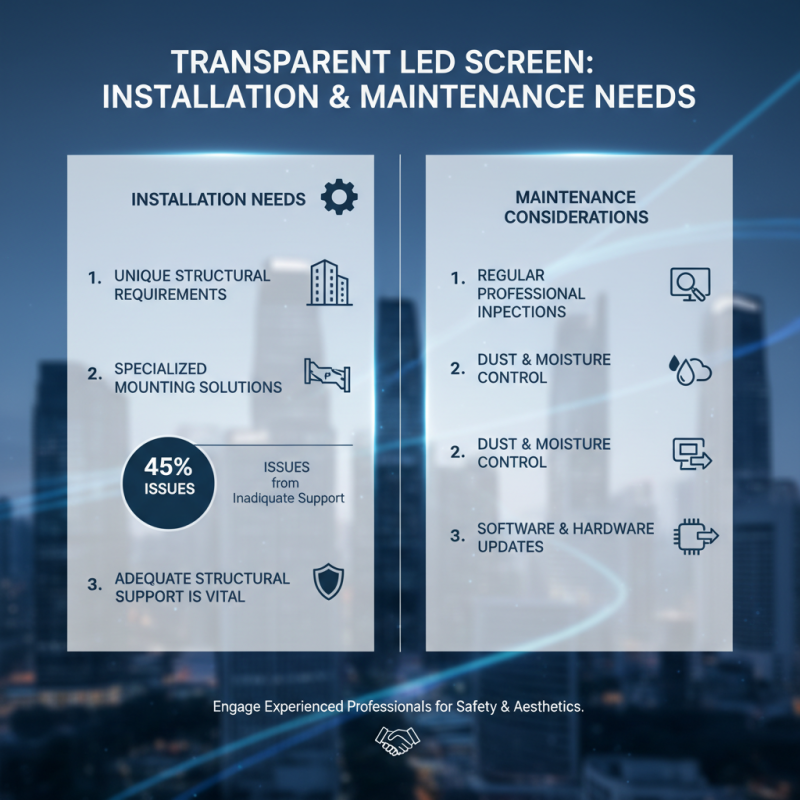
Reflect on the maintenance and durability of the screens as well. While some models offer robust performance, they may require more frequent upkeep. It's vital to weigh the long-term costs against the initial investment. Teamed with expert advice, this reflection will ensure you choose a solution that aligns with your needs and expectations.
Tip: Gather insights from previous users to understand potential drawbacks. They can provide practical advice on how to maximize your screen's performance.
Comparison of Key Factors for Choosing Transparent LED Screens
Understanding the Different Types of Transparent LED Technologies
Transparent LED screens are transforming the display landscape. Understanding the different types of transparent LED technologies is vital for making informed decisions. Two notable technologies dominate the market: OLED and LCD transparent displays. Each has its unique strengths and considerations.
OLED screens are renowned for their high contrast and vibrant colors. According to industry reports, they can achieve a contrast ratio of up to 1,000,000:1. This feature makes them ideal for environments where visuals matter most. However, they also come with a risk of burn-in, potentially limiting their lifespan.
In contrast, LCD transparent displays offer a different set of advantages. They can be brighter and have better durability against environmental factors. Yet, they generally fall short in color richness compared to OLED.
Choosing the best screen depends on your specific needs. Factors like viewing distance and ambient light influence performance. Transparent LED technology is still evolving. Costs and performance metrics vary widely among manufacturers. Investing time in research is crucial for a successful purchase. Market data shows that only 30% of users feel satisfied with their screen choices. This indicates a disconnect between expectation and reality. Being well-informed can help avoid common pitfalls in this fast-paced market.
Evaluating Brightness and Resolution for Optimal Display Quality
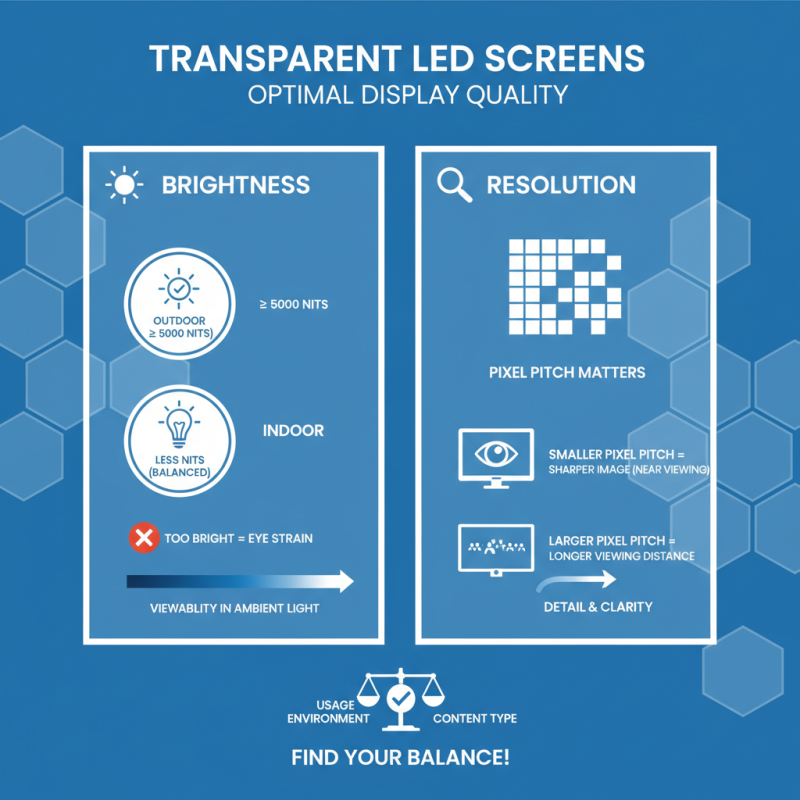
Choosing the right transparent LED screen can be challenging. One of the critical factors to consider is brightness. A brighter display can be viewed easily in well-lit environments. For outdoor applications, at least 5,000 nits is recommended. Indoor settings might require less brightness. However, too much brightness can cause eye strain. It's essential to find a balance that suits your usage.
Resolution is equally important. Higher resolution means clearer images, which is vital for displaying detailed graphics. A pixel pitch of 2.5mm or lower provides better clarity. Yet, it is worth noting that higher resolution screens can be more expensive and may require more power. Make sure the resolution aligns with the content you plan to display.
Tips: Always assess your viewing distance. Screens viewed from far away don't need high resolution. Test different brightness levels in your environment. An optimal experience often requires adjustments. Don't overlook the installation angle. It can impact how the brightness and resolution are perceived.
Budgeting: Cost Analysis of Transparent LED Screens and ROI Considerations
When considering the investment in transparent LED screens, budgeting is paramount. These screens can range significantly in price, often influenced by size, resolution, and technology. Understanding your specific needs will play a crucial role in determining how much to spend. A well-defined budget can help you avoid overspending.
Tips: Assess the total cost of ownership. Factor in installation and maintenance. Sometimes, the cheapest option in the market may not deliver the best long-term value. Research alternative financing options, such as leasing, which can ease upfront costs.
Return on Investment (ROI) is another essential consideration. Transparent LED screens often serve dual purposes: advertising and enhancing aesthetics. Evaluate how the screen could attract customers or enhance customer experiences. An increase in foot traffic can lead to higher sales over time. However, remember that ROI is not immediate. It can take months to measure the benefits fully.
Tips: Set realistic ROI expectations. Monitor performance metrics closely after installation. This will help you adjust marketing strategies effectively. Also, explore partnerships that could enhance visibility and reduce costs.




















 Screen Size Calculator