Top 10 Tips for Choosing an Indoor LED Display Screen?
When selecting an indoor LED display screen, insights from industry experts can be invaluable. John Smith, a renowned expert in digital signage, states, "The right LED display can transform any space." Choosing the correct screen demands careful consideration of various factors, including size, resolution, and brightness.
The indoor LED display screen market offers many options, but not all are suitable for every application. Some displays may excel in brightness but fall short in resolution. Others might be cost-effective but lack durability. Understanding these nuances is vital for making the best choice.
In many cases, buyers overlook essential details. Features like pixel pitch often receive inadequate attention. A poor choice can lead to a display that fails to meet expectations. Taking the time to evaluate your needs and the specific environment is crucial. This careful approach can ensure that your indoor LED display screen creates the intended impact.
Understanding Your Display Requirements and Purpose
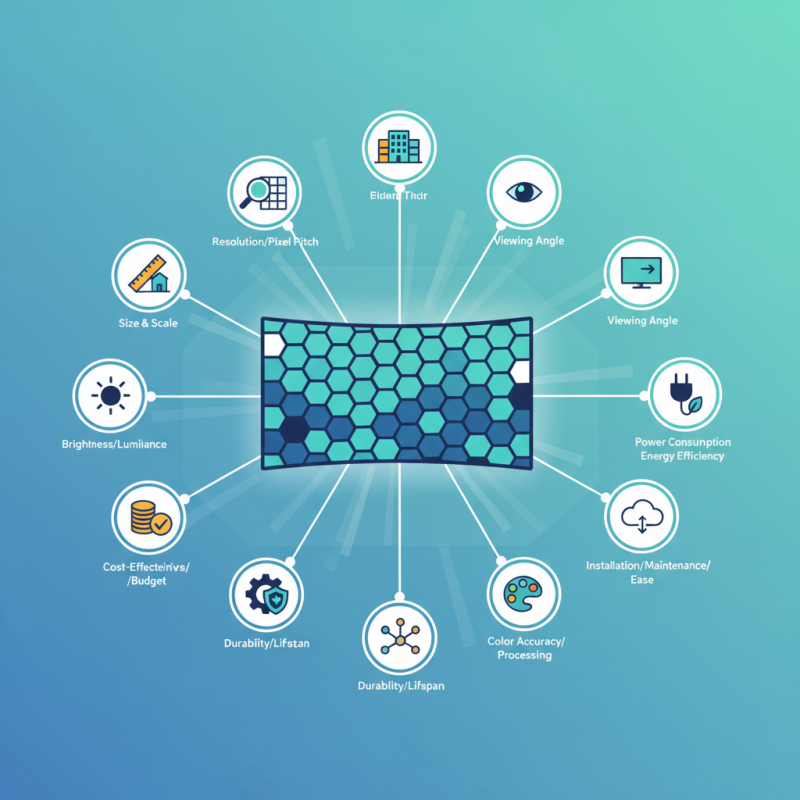
Choosing the right indoor LED display screen depends heavily on understanding your specific requirements and purpose. Consider the environment where the screen will be placed. Will it be in a dimly lit area or a brightly illuminated space? This aspect is crucial. A high-brightness display may be necessary for well-lit settings. Color vibrancy also matters. If you plan to show videos or images, look for displays with rich color reproduction.
Think about the size and viewing distance as well. A huge screen may not always be the best choice if viewers will be close. Conversely, a smaller screen might not suffice for larger spaces. The intended content also plays a role. If it’s mostly static text, you may not need the highest resolution. However, high-definition displays shine with dynamic visuals. Reflect on your audience too. Their demographics might influence the style and function of the display.
Lastly, consider the software integration capabilities. This detail can often be overlooked. You may find some screens lack compatibility with your existing systems. Testing various options can be time-consuming but essential. Pay attention to these elements. They will contribute to a successful installation. A well-chosen display can enhance engagement and communication.
Top 10 Tips for Choosing an Indoor LED Display Screen
| Tip Number |
Feature |
Description |
Importance Level |
| 1 |
Resolution |
Consider the pixel pitch and resolution according to viewing distance. |
High |
| 2 |
Brightness |
Select a brightness level suitable for your indoor environment. |
Medium |
| 3 |
Color Accuracy |
Ensure the display offers accurate color reproduction. |
High |
| 4 |
Viewing Angle |
Check the optimal viewing angle for your audience. |
Medium |
| 5 |
Refresh Rate |
Higher refresh rates lead to smoother visuals, especially for video. |
High |
| 6 |
Installation Type |
Decide between wall-mounted or freestanding options. |
Medium |
| 7 |
Maintenance |
Consider ease of maintenance and replacement parts availability. |
Medium |
| 8 |
Connectivity Options |
Ensure there are enough ports for your needs. |
High |
| 9 |
Budget |
Set a realistic budget and consider total cost of ownership. |
High |
| 10 |
Warranty and Support |
Look for a good warranty period and customer support options. |
Medium |
Evaluating Different Types of Indoor LED Display Technologies
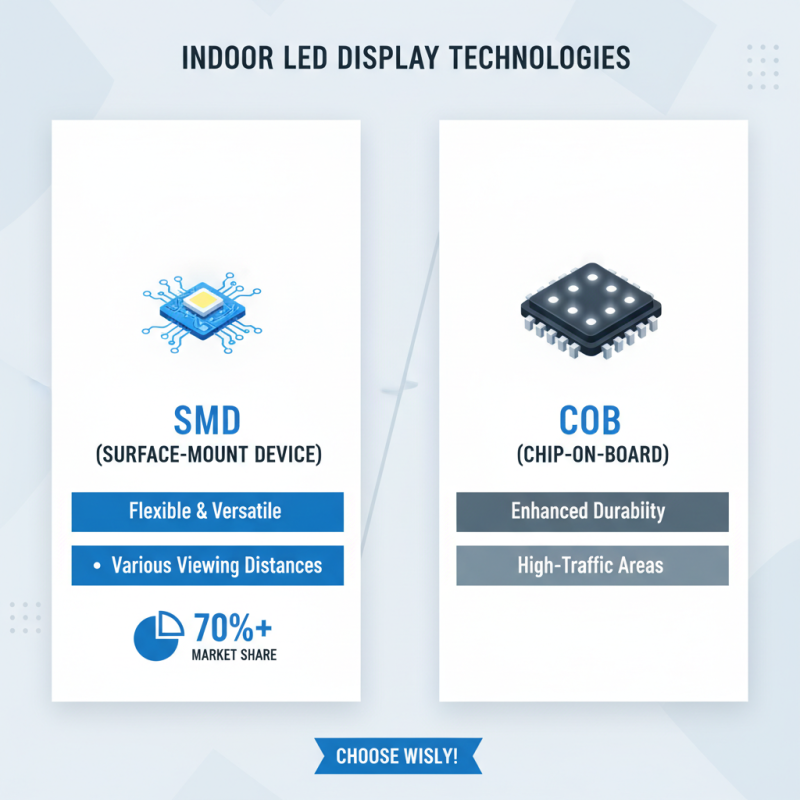
When selecting an indoor LED display, it's crucial to understand the different technologies available. Common types include SMD (Surface-Mount Device) and COB (Chip-on-Board) displays. SMD technology offers flexibility and is suitable for various viewing distances. COB displays provide enhanced durability and minimize pixel damage, making them ideal for high-traffic areas. According to a recent industry report, SMD displays dominate over 70% of indoor installations due to their versatility.
Another critical factor is pixel pitch. It dictates image quality. Smaller pixel pitches, like 1.5mm, deliver sharper images. However, they tend to be more expensive. A 2023 market study indicated that 56% of buyers prioritize pixel pitch over other features. This is a trend worth analyzing, as it reflects the growing demand for high-resolution content in corporate settings and entertainment venues.
While bright displays attract attention, their glare can detract from viewer experience. Balancing brightness and environment is important. Overly bright screens can cause fatigue. The right balance depends on installation location and ambient light conditions. Assessing these factors can lead to choices that not only meet visual demands but also enhance usability.
Assessing the Ideal Size and Resolution for Your Space
When selecting an indoor LED display screen, size and resolution play crucial roles. Start by assessing your space dimensions. The screen should fit well in your intended area. A display that's too large can overwhelm, while one that’s too small may not capture attention. Think about the viewing distance too. For example, if people will be far away, a larger screen is essential.
Consider resolution as well. A high-resolution screen provides clarity. But it might not be necessary for every space. In larger venues, lower resolutions may suffice if viewers are positioned at a good distance. You want to ensure every detail is clear without overpaying for extra pixels.
Here are some practical tips: Measure your wall space correctly. Keep in mind how people will view the screen. Will it be from the front or the side? Test different sizes using paper cutouts to visualize. Don’t forget to consider the room's lighting. A bright environment could require a brighter screen for optimal visibility. These reflections can lead to better decisions when finalizing your choice.
Top 10 Tips for Choosing an Indoor LED Display Screen
Comparing Brightness and Viewing Angles for Indoor Environments
When choosing an indoor LED display screen, brightness and viewing angles are crucial factors. Brightness is measured in nits. A higher number means a brighter screen. For indoor environments, 1000 to 2000 nits is often sufficient. However, too much brightness can cause discomfort. It might lead to glare and reduce the overall viewing experience. Balancing brightness is key; it should enhance visibility without being overwhelming.
Viewing angles are another important aspect. A screen with a wider viewing angle allows more people to see the content clearly. Many indoor screens offer viewing angles of up to 160 degrees. This means viewers can be seated at various positions without losing image quality. A narrow viewing angle can restrict the audience. You might find that the colors look different as viewers shift position. This inconsistency can impact how information is perceived.
Consider the environment where the screen will be placed. Factors like ambient light and distance from viewers can influence choices. A bright room requires a brighter display to combat outside light. Additionally, if your audience will be viewing the screen from far away, resolution matters too. Remember, testing the screen in its intended environment is crucial. What works in one setting may not in another.
Budgeting and Long-term Cost Considerations for Display Purchase
Budgeting for an indoor LED display screen involves careful planning. The initial cost is only part of the story. According to industry studies, the total cost of ownership includes installation, maintenance, and energy consumption. These factors can significantly impact your long-term budget.
For instance, a standard display might cost around $10,000 upfront. However, yearly maintenance can add another $1,000, depending on usage. Energy costs are another large factor. A report from the International Energy Agency found that modern LED displays consume about 75% less energy than traditional screens, yet they still incur costs. An estimated $300 to $500 per year may be expected for electricity, based on usage.
Planning for these expenses helps avoid future budget constraints. Many businesses underestimate these costs. A surprising 40% might not account for maintenance in their budget, leading to unexpected financial stress. Thoughtful budgeting should emphasize long-term costs to ensure that the display remains an asset rather than a liability.

















 Screen Size Calculator