How to Choose the Best Outdoor LED Screen for Your Needs?
Choosing the right outdoor LED screen can be challenging. With so many options available, making an informed decision is crucial. An outdoor LED screen serves various purposes, from advertising to entertainment. The right choice depends on your specific needs.
When considering an outdoor LED screen, think about the location. Will it be exposed to sunlight? Brightness is key in these scenarios. You might also need to consider size and resolution. A larger screen can attract more attention, but space may be limited.
It is essential to reflect on your budget. High-quality options can be expensive. However, investing in a good product will save you money over time. Look for reliable brands and read reviews. Sometimes, a less expensive screen may not meet your needs. Think about your audience too. What do they want to see? Matching your screen to their preferences is vital for successful engagement.
Understanding the Different Types of Outdoor LED Screens Available
When choosing an outdoor LED screen, it's essential to understand the various types available. Different applications require different screen characteristics. For example, a high-resolution display is crucial for events like concerts or sports. These screens must be bright enough to stand out in direct sunlight. Meanwhile, screens for advertising can have a lower resolution but must be visible from a distance.
Another aspect to consider is the durability of the screen. Outdoor conditions can be harsh. Screens face rain, wind, and dust. Some manufacturers claim to meet all weather conditions, but this is not always the reality. Regular maintenance is often required. Be wary of overselling. Pay attention to warranties and guarantees.
The installation process also varies. Some screens are modular, making them easier to assemble and disassemble. Others are fixed, which can be more complicated. If precise placement matters, this might require professional help. Think about your location's specifics, as factors like power supply and mounting options can affect what type of screen you choose. Each decision holds weight, and reflection on your unique needs is vital for an effective choice.
Key Factors to Consider When Selecting an Outdoor LED Screen
When selecting an outdoor LED screen, several key factors should be taken into account. Brightness is one of the most critical aspects. A screen needs sufficient brightness, typically 5000 nits or higher, to ensure visibility even in direct sunlight. This is crucial for capturing the audience's attention.
Viewing distance also matters. The pixel pitch, which is the distance between pixels, influences how far viewers can be from the screen. Generally, a smaller pixel pitch ensures better image quality up close. Consider how far away viewers will typically be. Not all applications require the highest pixel density, which can lead to unnecessary expenses.
**Tip:** Regular maintenance is essential for longevity. Dust and moisture can affect performance.
Durability is another major consideration. Outdoor screens should be weatherproof and capable of withstanding harsh conditions. Look for certifications like IP65 for water and dust resistance. This ensures that the investment remains functional over time.
**Tip:** Research installation options. Poor installation can lead to issues down the line.
Ultimately, evaluate what you need. Focus on your specific requirements and the environment where the screen will operate. Not every high-spec product is the best choice for every situation.
How to Choose the Best Outdoor LED Screen for Your Needs? - Key Factors to Consider When Selecting an Outdoor LED Screen
| Key Factor |
Description |
Recommended Value |
| Resolution |
The clarity of the image which can affect viewing quality |
P4 to P10 depending on viewing distance |
| Brightness |
Luminance level that helps visibility in sunlight |
5000 to 8000 nits |
| Durability |
Resistance to weather and environmental conditions |
IP65 or higher rating |
| View Angle |
The angle at which the display can be viewed clearly |
Horizontal: 140°, Vertical: 120° |
| Installation Type |
Method of setting up the screen (fixed, mobile, etc.) |
Fixed or modular for versatility |
| Cost |
Total expense including installation and maintenance |
$5,000 - $50,000 depending on specifications |
| Service Life |
The projected lifespan of the LED screen |
50,000 hours or more |
Assessing Brightness and Resolution for Outdoor Visibility
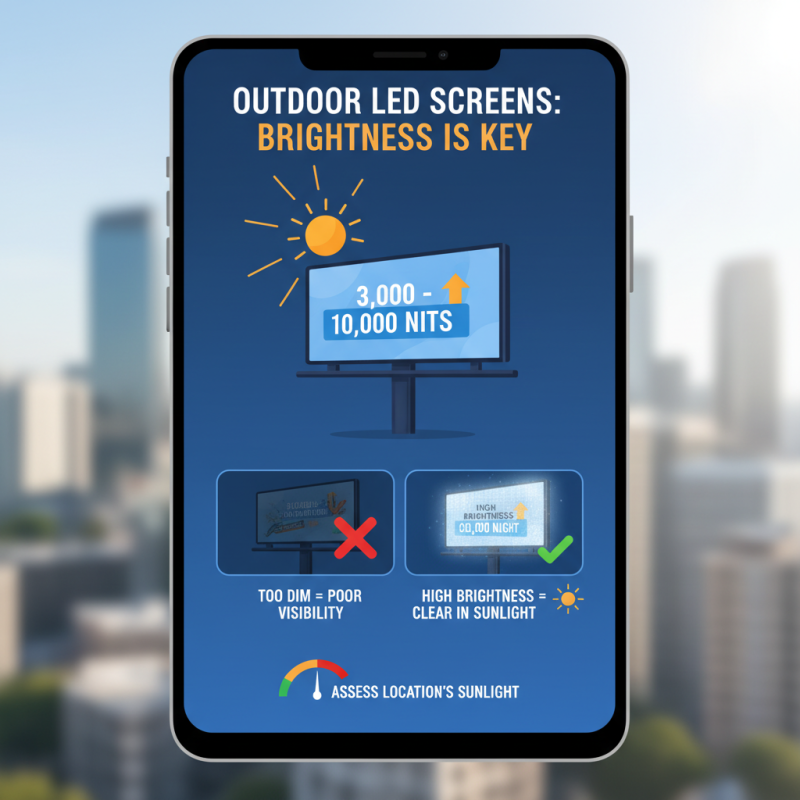
When selecting an outdoor LED screen, brightness is crucial. A screen with high brightness ensures visibility in direct sunlight. Typical brightness levels should range from 3,000 to 10,000 nits for daylight use. Screens that are too dim can lead to poor visibility, causing customers to miss vital information. It’s essential to assess your location's lighting conditions. You might need a screen with higher nits if you are in a sunny area.
Resolution is another key factor. A higher resolution ensures clearer images, especially for detailed graphics. Common outdoor resolutions range from 10mm to 4mm pixel pitches. Screens with a pixel pitch of 5mm or lower work well for close viewing. However, they tend to be costlier. Think about your audience's distance from the screen. Consider testing different resolutions to find what works best. You may notice that the cheaper options could lack clarity at further distances. This contrast becomes especially important during busy events with large crowds.
Evaluating Durability and Weather Resistance Features
When selecting an outdoor LED screen, durability is key. These screens face harsh environmental conditions.
Rain, wind, and extreme temperatures can cause serious damage. Make sure the screen has a sturdy casing. It should also meet IP ratings for water and dust resistance. Look for screens rated IP65 or higher. This rating indicates a high level of protection.
Weather resistance isn't just about the screen's exterior. The internal components must also withstand temperature fluctuations. Check if the screen includes thermal management systems. This feature helps maintain optimal performance during hot summers or freezing winters. Pay attention to the materials used. High-quality materials enhance longevity and reliability.
Think about installation locations as well. Screens in direct sunlight need better brightness and anti-glare features. Materials that reflect sunlight can extend the screen's life. Yet, some screens might struggle in shaded areas. This imbalance can affect visibility. Thus, considering the local climate matters too. Choose wisely to ensure your investment lasts.
Budgeting and Cost Considerations for Outdoor LED Screens
When budgeting for outdoor LED screens, it’s crucial to evaluate your needs carefully. The size of the screen will significantly impact your budget. Large screens can be more expensive, both in purchase and installation. Additionally, consider the pixel pitch. A tighter pixel pitch means better resolution but usually comes with higher costs. Assessing the viewing distance is important. If viewers will be far away, a larger screen with a higher pixel pitch may not be necessary.
Another cost consideration is maintenance and durability. Buying a cheaper screen may save money upfront, but it could lead to higher maintenance costs down the road. Look for warranties and support services included with your purchase. It’s also wise to factor in shipping and installation costs. These can add up quickly and should not be overlooked.
Financing options are available, but they can create long-term obligations. Reflect on whether leasing could be a better choice for your situation. Budgeting is a complex process, requiring thoughtful analysis. Each decision made should align with your overall goals for using the screen, ensuring it fits within your financial plan.















 Screen Size Calculator