Essential Tips for Choosing LED Screen Display Solutions?
When considering an LED screen display, several factors come into play. The choice of display can greatly impact your event, business, or project. LED screens are popular for their brightness, energy efficiency, and vibrant colors. However, selecting the right solution requires careful thought.
Begin by assessing your needs. What is the purpose of the LED screen display? Is it for outdoor use or indoors? Outdoor screens need to withstand weather conditions. Indoor screens focus more on resolution and color accuracy. Think about the size, too. It must fit the space and attract your audience.
Many people overlook technical support. Reliable service ensures your display works flawlessly during events. This can be a challenge for those new to LED technology. Take time to research and ask experts. Remember, an informed choice leads to better satisfaction. Reflect on your options; sometimes, simplicity is key.
Understanding the Basics of LED Screen Display Technology
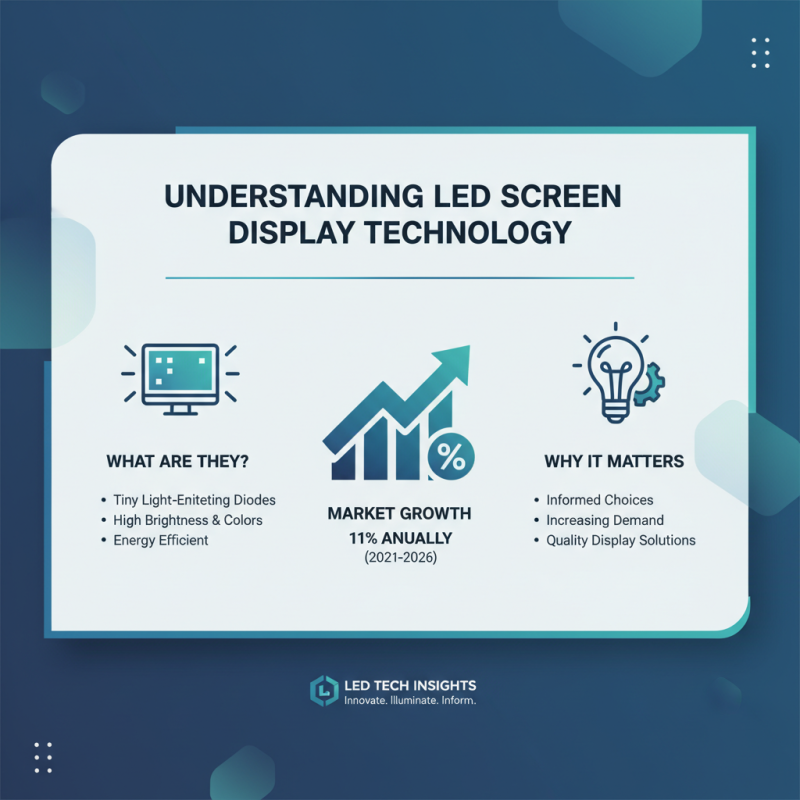
Understanding LED screen display technology is essential for making informed choices. LED displays are made of tiny light-emitting diodes. They offer high brightness, vibrant colors, and energy efficiency. One report shows that the global LED display market is expected to grow by 11% annually from 2021 to 2026. This rapid growth highlights the increasing demand for quality display solutions.
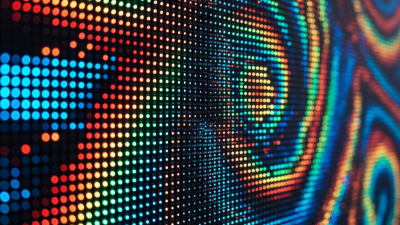
When selecting an LED screen display, consider the pixel pitch. This refers to the distance between pixels. Smaller pixel pitches denote higher resolution. For instance, a pitch of 2.5mm is ideal for indoor settings, while a 10mm pitch works better outdoors. Evaluate the screen's intended use. Is it for advertising, events, or conferences? Each situation has specific brightness and resolution needs.
Tip: Always check for the display’s lifespan rating. Most quality LED screens last at least 50,000 hours. Another important aspect is the refresh rate. A high refresh rate prevents flickering and enhances viewer comfort. Assess your space thoroughly. Not every solution fits every environment. An informed choice requires understanding both technical specs and contextual needs.
Identifying Your Display Needs and Requirements
When selecting LED screen display solutions, understanding your needs is crucial. First, identify where the display will be located. Indoor environments require different brightness levels compared to outdoor settings.
According to a report by IHS Markit, outdoor displays need at least 5000 nits to be visible in direct sunlight. This factor is foundational when exploring options.
Next, consider the resolutions suited for your application. Higher pixel density results in sharper images. For close-up viewing, a pixel pitch smaller than 3mm is ideal. Yet, larger pitches are sufficient for remote viewing. A recent study highlighted that user engagement increases by 30% with high-resolution displays. This shows the impact of resolution on viewer experience.
It’s also vital to evaluate content types. If your displays will show video content, ensure they support frame rates above 60 Hz for smooth playback. For static images or text, lower refresh rates may suffice. Remember, not all displays are versatile. Thus, careful analysis of your project requirements is key.
Don't overlook maintenance considerations. Regular upkeep extends lifespan and performance. Assess warranty terms and support services. Planning for future upgrades can also save costs down the line. Be proactive in your choice, as thinking ahead can minimize disruptions.
Evaluating Different Types of LED Screen Displays
When evaluating different types of LED screen displays, you must consider several key factors. The resolution is critical. Higher resolution displays give sharper images. This is especially important for large venues where viewers are far from the screen. Pixel pitch, the distance between pixels, affects how clear the image appears. A smaller pixel pitch means better clarity, but it can also increase costs.
Brightness and contrast are equally important. A display's brightness should meet the environment's lighting conditions. For outdoor displays, higher brightness levels are essential. On the other hand, contrast ratios enhance image quality. A good contrast ratio helps in achieving vibrant colors and deep blacks. Durability should also be examined. Outdoor screens face harsh conditions. They need to be resistant to weather, dust, and UV rays.
Lastly, look for features that matter to your specific needs. Some displays offer flexibility in shape and size. Others allow for quick installation and maintenance. However, not every feature is necessary for every application. Reflecting on these aspects can guide your choice, helping you avoid potential pitfalls such as overspending or choosing an inadequate display.
Comparison of Different Types of LED Screen Displays
Comparing Cost, Quality, and Performance Factors
When selecting an LED screen display, cost, quality, and performance are critical aspects to evaluate. The price tag of a display may seem attractive, but you should consider the long-term value. Cheaper displays often compromise on quality. They may use lower-grade components, leading to issues down the line. Aim for a balance between affordability and durability.
Quality is pivotal for effective display solutions. Examine the pixel pitch and resolution. A smaller pixel pitch enhances image clarity, vital for audience engagement. Luminosity matters too; a brighter screen performs better outdoors. Don’t just rely on specs alone; seek user reviews. Real user experiences reveal insights you might overlook.
For performance, consider the intended use. Is it for advertising or informational purposes? Each application has different requirements. A display meant for events needs quick refresh rates, while a static display can function well with lower specs. Always ask for demonstrations to understand how the screen performs in various conditions. This process helps identify potential shortcomings.
Considering Installation and Maintenance Aspects of LED Displays
When considering installation and maintenance aspects of LED displays, several crucial factors must be taken into account. The installation environment plays a significant role. Indoor and outdoor settings require different considerations. Outdoor displays need weatherproof housing. Meanwhile, indoor installations focus on optimal viewing angles and ambient lighting.
Maintenance is equally important. Regular checks can prevent costly repairs. Dust accumulation can reduce brightness and clarity. It's essential to clean LED screens consistently. Schedule routine inspections to identify potential issues early.
Here are some tips for selecting LED display solutions:
- Prioritize ease of access for maintenance. Ensure technicians can reach all parts of the display.
- Choose displays with modular designs. These are easier to repair, minimizing downtime.
- Consider the technical support offered by your supplier. Reliable assistance can make a significant difference in effective maintenance.
Overall, understanding these factors will help you choose an appropriate LED screen display solution that meets both your immediate and long-term needs.
Essential Tips for Choosing LED Screen Display Solutions
| Aspect |
Considerations |
Important Factors |
| Installation Location |
Indoor vs Outdoor |
Brightness, weather resistance |
| Display Size |
Audience Distance |
Pixel pitch, resolution |
| Maintenance Plan |
Routine Checks |
Service options, warranty |
| Power Consumption |
Energy Efficiency |
Operating costs |
| Content Management |
Software Usability |
Flexibility, updates |
















 Screen Size Calculator