2026 How to Choose the Best Indoor LED Display Screen?
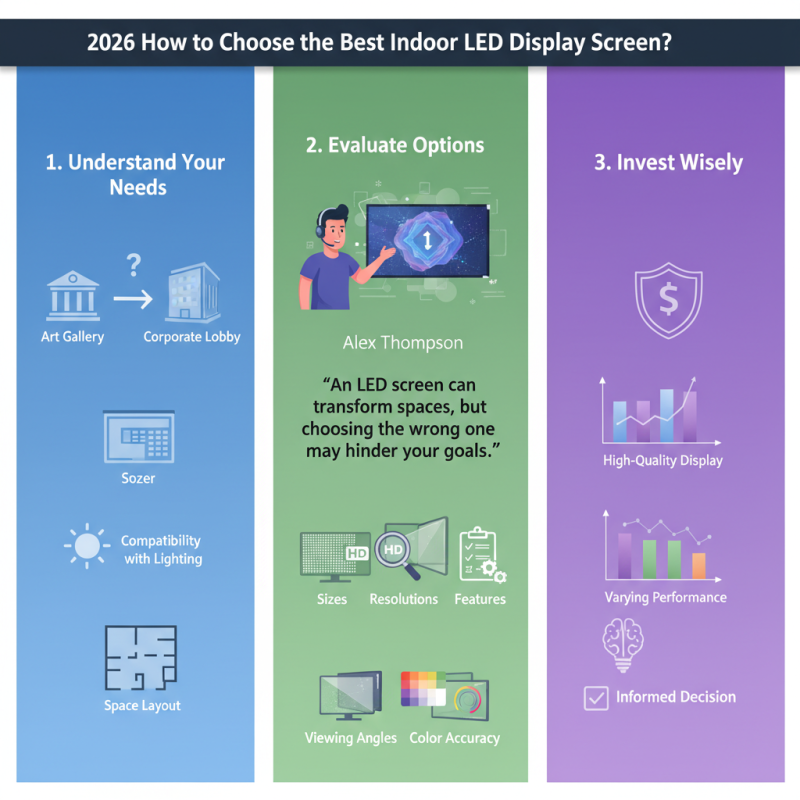
Choosing the right indoor LED display screen can significantly influence your business's visual appeal. According to Alex Thompson, an expert in digital signage, "An LED screen can transform spaces, but choosing the wrong one may hinder your goals." His insight emphasizes the importance of careful selection.
Understanding your specific needs is crucial. Indoor LED display screens come in various sizes, resolutions, and features. A display that works for an art gallery may not be suitable for a corporate lobby. Compatibility with lighting and space layout also plays a role.
Investing in a high-quality display is essential, yet not all brands provide the same level of performance. Issues such as viewing angles and color accuracy can affect usability. It's easy to overlook these details in the excitement of procurement. Taking the time to evaluate options can lead to a more informed decision.
Understanding Indoor LED Display Technologies and Their Variants
Indoor LED display technologies have evolved significantly, offering various options tailored to different needs. Key types include SMD (Surface-Mounted Diode) displays and DIP (Dual In-Line Package) displays. SMD is noted for its fine pixel pitch, which delivers high-resolution images. Such displays are ideal for environments craving detailed visuals. On the other hand, DIP displays are commonly used for large, outdoor settings due to their luminous power and durability.
Another consideration is the display's refresh rate, crucial for video content. A higher refresh rate ensures smoother playback, essential for dynamic presentations. However, many buyers overlook this aspect, leading to less than optimal experiences. Viewing angles also affect performance, with wider angles providing better visibility from various positions. Selecting the right viewing angle enhances overall audience engagement.
Moreover, it's vital to assess installation requirements and space limitations. Complex installations can lead to increased costs and potential issues down the line. Many choose larger screens or more advanced models without factoring in these logistical challenges. Evaluating your space and intended use helps prevent missteps in the selection process. These reflections can significantly impact the final decision, making informed choices all the more crucial.
Evaluating Key Specifications: Brightness, Resolution, and Color Accuracy
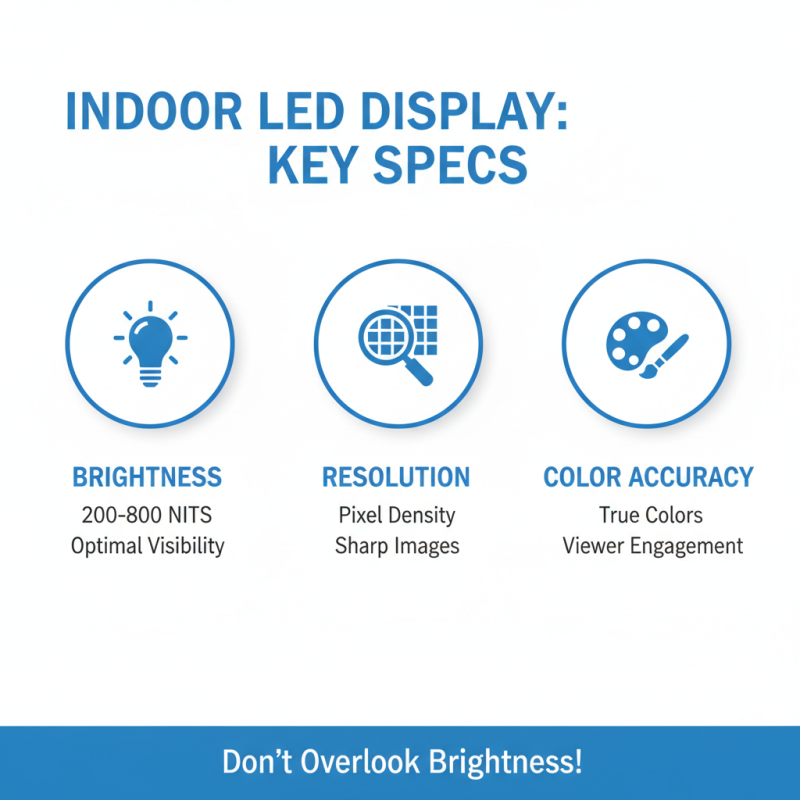
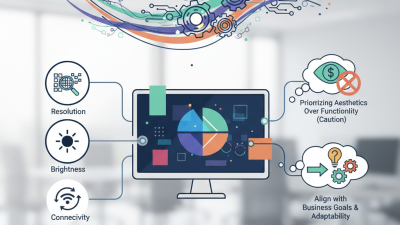
When selecting the best indoor LED display screen, brightness, resolution, and color accuracy are crucial factors. According to recent industry reports, the ideal brightness for indoor screens typically ranges from 200 to 800 nits. This range ensures optimal visibility in various lighting conditions. Yet, many users overlook this feature, leading to screens that are either too dim or overly bright for their environment. Effective brightness contributes to viewer engagement, making it essential to carefully assess this specification.
Resolution plays a key role in display clarity. For indoor environments, a pixel pitch of 1.2 mm to 3.9 mm is common. Reports indicate that higher resolution screens, with pixel pitches below 2.5 mm, are best for close viewing distances. However, achieving high resolution can drive up costs significantly. Users often need to balance resolution needs with budget constraints. A practical approach is to test potential screens in actual viewing situations before purchasing.
Color accuracy is another vital criterion, directly impacting visual quality. Industry standards recommend a color accuracy rate of over 95%. Deviation in color representation can lead to miscommunication of visual content. Some displays might achieve high brightness or resolution but fail in color fidelity. This inconsistency can frustrate viewers. Failing to prioritize color accuracy might diminish the overall effectiveness of the display. Understanding these specifications helps users make informed decisions when investing in indoor LED displays.
Assessing Lifespan and Energy Efficiency of LED Display Screens
When selecting an indoor LED display screen, lifespan and energy efficiency are crucial factors. A reliable LED screen can last between 50,000 to 100,000 hours. However, this can vary based on the brand, usage, and environment. It's essential to consider how often the display will be on. Frequent use will naturally wear down the components faster.
Energy efficiency is equally important. An energy-efficient model will not only reduce electricity costs but also minimize environmental impact. Look for screens with high lumens per watt ratios. This ensures bright displays without consuming excessive power. However, keep in mind that lower efficiency can mean higher operational costs over time.
Evaluating these aspects requires a careful balance. A longer lifespan usually suggests better build quality, but it may come at a higher initial cost. Similarly, energy-efficient models often feature advanced technology. This might not always mean they're the most affordable option in the long run. Ultimately, assessing both lifespan and energy usage will help in making an informed choice.
Analyzing Cost Factors: Budgeting for Quality and Maintenance
When budgeting for an indoor LED display screen, it’s crucial to analyze the total cost of ownership. Industry reports indicate that initial purchase costs can be misleading. While a lower upfront price may seem attractive, maintenance and operational expenses can accumulate quickly. According to a study by the Display Industry Association, maintenance can consume up to 30% of a screen's total cost over its lifespan.
Quality often correlates with price. Higher-quality LED displays tend to offer better longevity and lower maintenance requirements. A report by the Global LED Market Research Group highlights that premium models can last up to 100,000 hours. Conversely, cheaper options may fail sooner, leading to unexpected replacement costs. Therefore, considering quality is essential when evaluating your budget.
It’s also important to factor in installation expenses. Professional installation is often necessary for optimal performance, which can add significant costs. Some might overlook this aspect, leading to potential issues down the line. A survey by AV Magazine found that improper installation can reduce a display's effectiveness by 20%. This emphasizes the need for thoughtful budgeting that encompasses all dimensions of ownership, not just the initial price tag.
2026 How to Choose the Best Indoor LED Display Screen? - Analyzing Cost Factors: Budgeting for Quality and Maintenance
| Dimension |
Description |
Cost Factor ($) |
Maintenance Frequency (Years) |
| Size (sq ft) |
The physical dimensions of the display |
2000 - 5000 |
5 |
| Resolution (pixels) |
Number of pixels per square foot |
1000 - 3000 |
3 |
| Brightness (nits) |
Brightness level of the display |
500 - 1500 |
4 |
| Refresh Rate (Hz) |
Rate at which the image refreshes |
60 - 144 |
2 |
| Power Consumption (Watt) |
Energy requirement of the display |
200 - 800 |
3 |
Compatibility and Integration: Ensuring Optimal Performance with Existing Systems
When selecting an indoor LED display screen, compatibility is vital. A good display must mesh seamlessly with existing systems. Consider the current audio-visual setup and how the new screen will fit. Identify interfaces like HDMI or VGA. Not all displays support the same formats. This can lead to frustrating compatibility issues.
Integration is another key aspect. Evaluate the software used for display management. The new LED screen should be easy to control with existing tools. Disparities in software can create unnecessary complications. A professional evaluation may be required. This could expose potential flaws in the integration process. Proper alignment with current systems will save time and resources.
It's also important to assess the physical environment. A stunning LED display can fall short if it's not suited for the space. Lighting conditions and viewing distances matter. A display that dazzles in one setting might be ineffective in another. Conduct thorough on-site evaluations to ensure the display's optimal performance. Always remain open to adjustments after installation. Flexibility is crucial for achieving the best results.















 Screen Size Calculator