What Are the Top Types of Rental LED Screens?
A rental LED screen can transform a blank stage, a busy exhibition booth, or an outdoor concert into a vivid focal point. The right type depends on more than brightness. Viewing distance, screen size, setup time, weather exposure, and transport all shape the choice. A fine-pitch indoor wall can make close-up product details look crisp, while a robust outdoor screen must stay readable under bright sunlight. There is no single best option. A screen that looks impressive in a warehouse may feel too dim or too large in a real venue.
As an illustrative rental LED screen expert, event display consultant Alex Morgan might put it this way: “Choose the screen for the audience’s view, not just the equipment list.” This is an editorially drafted quote, not a verified statement from a published interview. That distinction matters when evaluating buying advice. In practice, teams should compare pixel pitch, cabinet design, brightness, and installation needs against the event plan. Small details count. A narrow loading door, a low stage ceiling, or a close front row can change the practical choice. This guide explores the top rental LED screen types, from indoor and outdoor displays to flexible and transparent options. It also points out trade-offs, because rental decisions can be less straightforward than product brochures suggest.
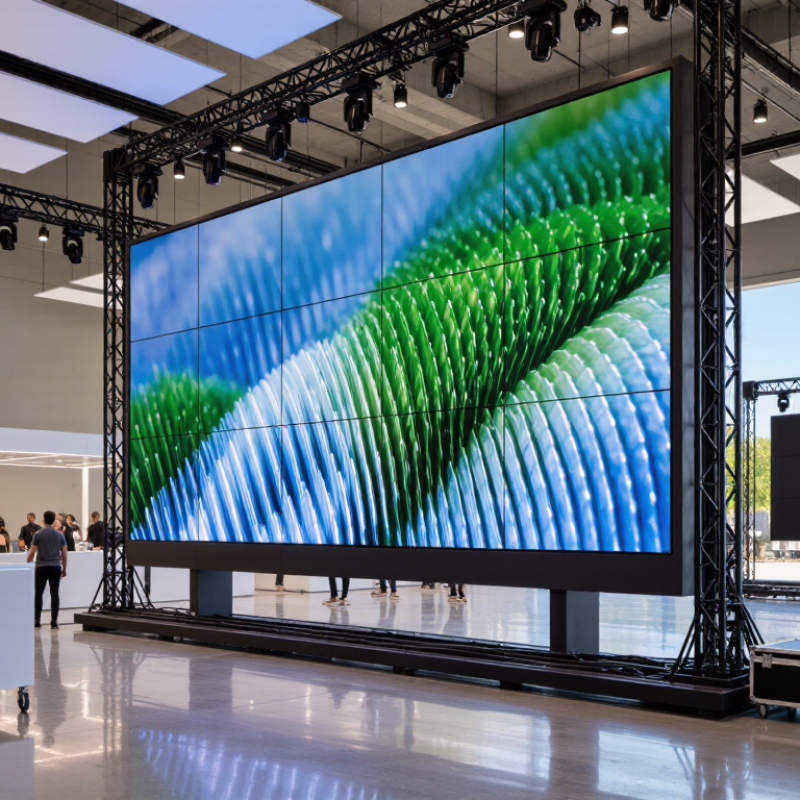
Rental LED Screen Types: Classification by Venue, Pixel Pitch, and Cabinet Design
Rental LED screens can be classified by venue, viewing distance, and cabinet design. Indoor ballrooms and studios usually need fine-pitch panels, often around P1.9–P2.6, for close viewing. Outdoor stages may use coarser pitches, such as P3.9–P4.8, when audiences stand farther away. These are practical ranges, not fixed rules. Measure the nearest viewing position before choosing.
AVIXA’s 2024 Industry Outlook and Trends Analysis projects global professional audiovisual revenue will reach $325 billion by 2029. This is a broad market forecast, not a rental LED screen estimate, but it reflects demand for flexible production systems. Cabinet design matters on site: lightweight flat cabinets speed rigging, while curved or corner cabinets help create shaped stages. Outdoor cabinets also need suitable weather protection. Finer pitch can mean greater cost and weight. A real trade-off.
Tips: Check cabinet weight, locking, and alignment before loading a truck. For a small ballroom, test sightlines from the back row; a crisp close-up may still look too small from the seats. Don’t rely on the spec sheet alone.
Top Rental LED Screen Types by Venue and Pixel Pitch
Common planning ranges for rental LED screens. Pixel pitch is the distance between pixel centers; smaller pitches generally suit closer viewing.
Cabinet designs: Flat cabinets suit standard walls; curved or arc-compatible cabinets create concave or convex displays; lightweight touring cabinets help speed up stage builds. These pitch ranges are indicative, not fixed standards—viewing distance, content, brightness, and site conditions affect selection.
Indoor Fine-Pitch Screens: Common Pixel Pitches Range from 1.5 to 2.9 mm
Indoor fine-pitch LED screens commonly use pixel pitches from 1.5 to 2.9 mm. Pixel pitch measures the distance between neighboring pixels. A smaller pitch usually produces a smoother image when viewers stand close, such as at a conference table or product display. A 2.9 mm screen may suit a larger room where the audience sits farther back. Distance matters. The right choice depends on the room, content, and viewing position, not just the smallest number.
For a rental, check how the screen looks from the nearest seat and from the back of the room. Fine text and detailed graphics can expose gaps or uneven color between panels, so ask to inspect a powered section before setup. For filmed events, request a camera test; refresh behavior and camera settings can affect how the image appears on video. Also confirm cabinet alignment, brightness adjustment, and the time needed for installation. A brighter image is not always better indoors. It is easy to overvalue pixel pitch and overlook practical details, and I would reconsider that choice if the screen will mainly show large, simple visuals.
Stage and Touring Screens: 500 × 500 mm Cabinets Support Rapid Assembly
Stage and touring LED screens often use rental cabinets measuring 500 × 500 mm. Their compact, repeatable size helps crews build wide backdrops, side screens, or narrow scenic columns. Cabinets connect in a grid, allowing a trained team to assemble displays quickly and replace a damaged section without dismantling the full wall. Fast does not mean careless.
During a busy load-in, alignment matters. Latches should close evenly, cables should follow the system plan, and the first row needs a level base. Even a small gap can stand out in a camera close-up. Cabinet weight, pixel pitch, brightness, and weather rating vary by model, so check the technical specifications before selecting a rental package. The 500 mm format is practical, but it may not fit every frame or processing system.
Tips: Confirm dimensions and connector layouts before delivery. Keep spare modules nearby, and test a small section before building upward. Follow the venue’s rigging plan; cabinet locks alone are not overhead support.
Creative Rental Screens: Transparent, Flexible, and Floor-LED Formats
Rental LED screens now shape spaces, not just stages. Transparent panels preserve sightlines across glass façades and exhibition booths, while animated graphics appear to float in the air. They work best where ambient light is controlled and content uses bold shapes. Fine text can disappear against busy backgrounds. Looks effortless. It isn’t.
Flexible LED modules wrap around columns, arches, and curved stage edges. Installers should check the permitted bend radius, cabinet weight, and pixel pitch before designing the structure. A curve that looks smooth from the front may reveal uneven seams from the side. Grand View Research valued the global digital signage market at USD 28.83 billion in 2023 and projected 8.1% annual growth through 2030. That broad market figure signals expanding display use, but it does not measure rental LED demand specifically.
Floor-LED formats turn walkways and stage decks into active surfaces. Specify load capacity, slip resistance, surface protection, and service access; test footwear and camera shots under the actual lighting. AVIXA’s 2024 Industry Outlook and Trends Analysis projected global professional audiovisual revenue could reach USD 325 billion by 2029. This is useful market context, not proof that every creative format will suit every event. On site, a small test area often catches glare, visible seams, or awkward transitions before the full build.
What Are the Top Types of Rental LED Screens? — Creative Rental Screens: Transparent, Flexible, and Floor-LED Formats | Screen Format | Typical Pixel Pitch | Typical Brightness | Key Visual Characteristic | Common Rental Applications | Installation Considerations |
| Transparent LED | About 3.9–10.4 mm | About 3,000–5,000 nits | Open construction allows light and some views through the display; transparency commonly varies by product and panel design. | Shopfronts, event stages, glass façades, exhibitions, and scenic backdrops. | Check sightlines, ambient light, mounting structure, and cable routing. Image quality is generally best when viewers are not extremely close. |
| Flexible LED | About 1.9–4.8 mm | About 800–2,000 nits | Flexible modules can follow curved or cylindrical surfaces, subject to the product’s minimum bend radius. | Curved stages, columns, creative set pieces, exhibitions, and branded event environments. | Confirm the permitted curve, support method, and protection during transport. Avoid bending modules beyond the manufacturer’s specified limits. |
| Floor LED | About 2.6–5.2 mm | About 1,000–4,500 nits | Designed for floor-level viewing and interactive visual effects; many systems use a protective surface and support foot traffic. | Stage floors, audience interaction zones, event walkways, trade shows, and performance platforms. | Verify the system’s load rating, surface grip, protection, and leveling requirements for the planned use. Keep connections protected and the surface clean and dry. |
| Note: Specifications are indicative ranges for common rental formats, not guaranteed values. Actual pixel pitch, brightness, transparency, viewing distance, and load capacity vary by product and configuration; confirm the technical data for the specific panels being rented. |


 Screen Size Calculator