Which Type of LED Display Screen Is Best in 2026?
Choosing the best led display screen in 2026 starts with the space, audience, and content—not the newest product label. A screen for a bright shop window has different needs from one used in a quiet meeting room. Viewing distance, ambient light, installation limits, and service access all affect the right choice.
For indoor displays, pixel pitch matters because viewers may stand close enough to notice individual pixels. Fine-pitch screens can show crisp text and detailed graphics, but they may cost more than a venue needs. For outdoor use, brightness, weather resistance, and readable contrast deserve careful attention. More brightness is not automatically better. It should suit the surroundings and viewing conditions.
Details matter.
This guide compares common options, including fixed installations, rental panels, fine-pitch displays, and outdoor LED screens. It explains where each type performs well and what trade-offs buyers should check. A specification sheet can be useful, but it may not show how a display looks under real lighting or how easily technicians can reach its components. That is worth questioning.
Before choosing, compare pixel pitch, brightness, refresh rate, maintenance access, warranty terms, and total operating costs. Ask suppliers for demonstrations using content similar to your own. No single screen is best for every project. The most reliable choice is the one that fits the viewing distance, environment, budget, and support available after installation.
What Is an LED Display Screen and How Does It Work?
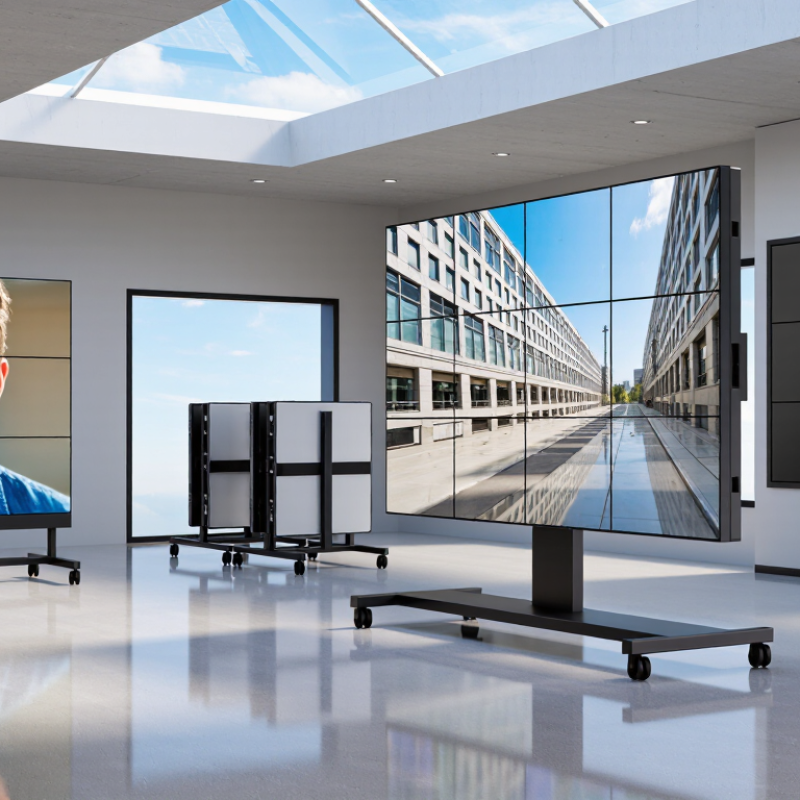
An LED display is self-emitting: tiny diodes make the image instead of a backlight illuminating liquid crystals. Each pixel combines red, green, and blue light; changing their output creates different colors. Electronic drivers send timed signals to pixel rows, while pulse-width modulation controls perceived brightness. At close range, you can see the pixel grid. That matters.
The U.S. Department of Energy’s 2022 Solid-State Lighting R&D Opportunities report discusses LED-package efficacy near 200 lumens per watt under optimized conditions. This is component performance, not a finished screen’s efficiency. Drivers, color mixing, and brightness settings all affect power use. The distinction is easy to miss.
The best display type depends on viewing distance and ambient light. Fine-pitch indoor panels suit close viewing, while larger-pitch outdoor panels can remain legible across open spaces. Outdoor screens also need enough brightness to compete with daylight. More brightness is not automatically better; it can increase energy use and cause visual discomfort. And pixel pitch alone cannot predict image quality. Calibration, content, and the actual viewing angle matter too.
What Are the Main Types of LED Display Screens?
LED display screens are commonly grouped by where they work and how they are built. Indoor screens usually use finer pixel pitches, so text and images stay clear at close viewing distances. Outdoor screens need stronger brightness and weather-resistant construction. A bright display can still look washed out in direct sun. Not always.
Fine-pitch LED screens suit control rooms, retail spaces, and presentations where viewers stand nearby. Standard indoor screens work well in larger halls, where people sit farther away. Pixel pitch affects both image detail and viewing distance, but it also affects cost. The smallest pitch is not automatically the best choice. Measure the room and consider where people will stand.
Rental screens are designed for repeated setup, often using lightweight cabinets and quick connections. Transparent LED screens allow light through windows or glass walls, though nearby reflections can reduce clarity. Flexible LED panels can follow curved surfaces, but their shape may complicate installation and maintenance. All-in-one displays combine a screen, control system, and other components in one package. Convenient, but check whether the size and service access fit the space. The categories overlap, which can make comparisons confusing. Look closely. Ask for a viewing-distance demonstration, and inspect the image under lighting similar to the installation site.
How Do LED Display Types Compare in 2026?
LED display types are best compared by viewing distance, ambient light, and installation conditions—not by resolution alone. Fine-pitch indoor screens suit close viewing in control rooms, retail spaces, and studios. Their tighter pixel spacing produces smoother text, but it can raise cost and make servicing more demanding. Context matters.
Outdoor LED screens prioritize brightness, weather resistance, and visibility in direct sunlight. Their wider pixel pitch often works well when viewers stand farther away. Transparent displays preserve sightlines through glass, though bright backgrounds can reduce image contrast. Rental screens, by comparison, use modular cabinets designed for repeated setup; joints and alignment need careful checking after assembly.
For a 2026 project, compare pixel pitch, brightness, refresh rate, power use, and access for maintenance. Ask for measurements under conditions similar to the real site. A showroom image may not reveal glare from a window or detail loss at the intended viewing distance. Not always. MicroLED and other fine-pitch options may deliver excellent detail, but availability, budget, and repair planning still matter. The right choice depends on what viewers must see, and from where.
Which Type of LED Display Screen Is Best in 2026? — How Do LED Display Types Compare in 2026?
| LED Display Type | Typical Pixel Pitch | Typical Brightness | Best-Suited Applications | Key Advantages | Main Trade-Offs | What to Check Before Choosing |
|---|---|---|---|---|---|---|
| Indoor Fine-Pitch LED | About 0.7–2.5 mm | Commonly about 600–1,500 nits | Control rooms, broadcast studios, corporate lobbies, and close-viewing presentation spaces | Seamless large-format image; close viewing; fine detail at suitable pitches | Higher resolution generally raises cost; close viewing makes calibration and uniformity more noticeable | Viewing distance, pixel pitch, refresh rate, grayscale performance, service access, and room lighting |
| Outdoor Fixed LED | Often about 3–10 mm | Commonly about 4,500–8,000 nits, depending on site conditions and model | Building façades, roadside advertising, stadium displays, and outdoor information boards | High brightness for daylight; products can be designed for weather exposure and long operating hours | Requires suitable structural support, electrical planning, and maintenance access; coarser pitches suit longer viewing distances | Front and rear IP ratings, local weather, ambient light, viewing distance, wind loading, and installation regulations |
| Rental LED | Often about 1.9–5.9 mm | Indoor models commonly about 800–1,500 nits; outdoor models are often brighter | Concerts, exhibitions, conferences, touring productions, and temporary events | Cabinets are designed for repeated assembly; many systems support fast locking and front or rear servicing | Repeated handling can cause wear; setup, alignment, and protection during transport require attention | Cabinet weight, rigging method, corner protection, spare-parts availability, refresh rate, and indoor/outdoor rating |
| Transparent LED | Commonly about 3.9–10 mm, with product-specific variations | Varies widely; outdoor-facing products are typically specified for brighter environments | Storefront glazing, atriums, glass façades, and displays where keeping some visibility through the screen matters | Allows light and partial sightlines through the display; can reduce the visual obstruction of a conventional opaque screen | Image contrast and visibility depend on background light and content; not suitable where a fully opaque image is required | Transparency percentage, viewing angle, glass structure, daylight conditions, mounting method, and local building requirements |
| Flexible LED | Often about 1.2–4 mm, depending on the product | Varies by model and intended environment; confirm the specified value for the installation | Curved walls, columns, creative interiors, and installations with non-flat surfaces | Can form selected curves or shapes that rigid cabinets cannot readily achieve | Minimum bend radius and usable geometry are product-specific; complex shapes can increase installation effort | Permitted bend direction and radius, mounting surface, service access, cabinet alignment, and intended operating conditions |
| All-in-One LED Display | Commonly about 0.7–2.5 mm for indoor systems | Often designed for indoor use, commonly around 600–1,000 nits | Meeting rooms, classrooms, reception areas, and presentation spaces needing an integrated display system | Often combines the display with control, audio, or conferencing features in a coordinated package | System size and configuration may be less flexible than a separately designed LED wall; replacement options vary | Room size, viewing distance, input and conferencing requirements, installation access, warranty, and service plan |
Note: Figures are broad, representative ranges rather than guaranteed specifications. Actual pixel pitch, brightness, protection ratings, and capabilities vary by product and configuration. The best choice depends on viewing distance, ambient light, installation conditions, content, and budget.
Which LED Display Type Suits Each Application?
The right LED display depends on where people will view it and what they need to see. For control rooms, studios, and meeting spaces, fine-pitch indoor screens keep text and graphics sharp at close range. In a large outdoor plaza, a brighter display with weather-resistant construction is usually more suitable. Event teams often prefer rental screens that can be assembled, moved, and serviced quickly. Different jobs call for different trade-offs.
Retail displays work well when colors stay clear under store lighting and messages are readable at a glance. For sports venues, a large screen with strong visibility from distant seats matters more than close-up pixel detail. Curved or transparent LED displays may fit architectural features, but they need careful planning around viewing angles, installation, and content. Even experienced teams can overlook glare from nearby windows. There is no perfect choice.
Tips: Match pixel pitch to typical viewing distance, then check brightness in the actual lighting conditions. Ask to see a sample playing your own content. A short test helps. Also confirm access for maintenance; a screen that looks impressive but is hard to service can become an expensive headache.
How to Choose the Best LED Display for Your Needs in 2026?
Which Type of LED Display Screen Is Best in 2026?
Choosing the best LED display starts with where people will view it. Measure the usual viewing distance, then compare pixel pitch: smaller pitches produce finer images at close range, but often cost more. A display viewed across a lobby may not need the same detail as one beside a conference table. Check the actual content, too. Small text and detailed charts reveal pixelation quickly. For outdoor screens, assess direct sunlight, rain exposure, and viewing angles at different times of day. Brightness matters, but more is not always better. Excessive brightness can cause glare and waste energy.
Think about installation and upkeep before choosing a screen type. Fixed indoor displays suit many meeting rooms and retail spaces; outdoor installations need suitable weather protection and sturdy mounting. Rental screens may make more sense for temporary events. Ask how technicians access the display and whether individual modules can be replaced. Check operating and maintenance costs, not just the purchase price. Request a demonstration using your own video or presentation, viewed from the distance your audience will stand. There is no perfect choice. I would reconsider any recommendation that ignores the room, content, and budget. A short site visit can prevent an expensive mismatch.
Related Posts
-
10 Tips for Buying an LED Display Screen
-
Why Choose an LED Screen Display for Your Business?
-

Top Benefits of Using LED Screens for Events and Businesses
-
Top 5 Outdoor LED Display Options for Global Buyers?
-
What is a LED Display Panel and How to Choose the Right One?
-
China Top LED Screen Panel Manufacturers How to Choose?