How to Choose the Best Outdoor LED Screen for Your Needs?
Choosing the right outdoor LED screen can be challenging. Various options exist in the market. Finding the perfect fit for your needs requires careful consideration.
Outdoor LED screens are essential for businesses and events. They enhance visibility and engage audiences effectively. However, with many models available, it’s easy to feel overwhelmed. Outdoor LED screens vary in size, brightness, and resolution. These factors play a crucial role in your decision-making process.
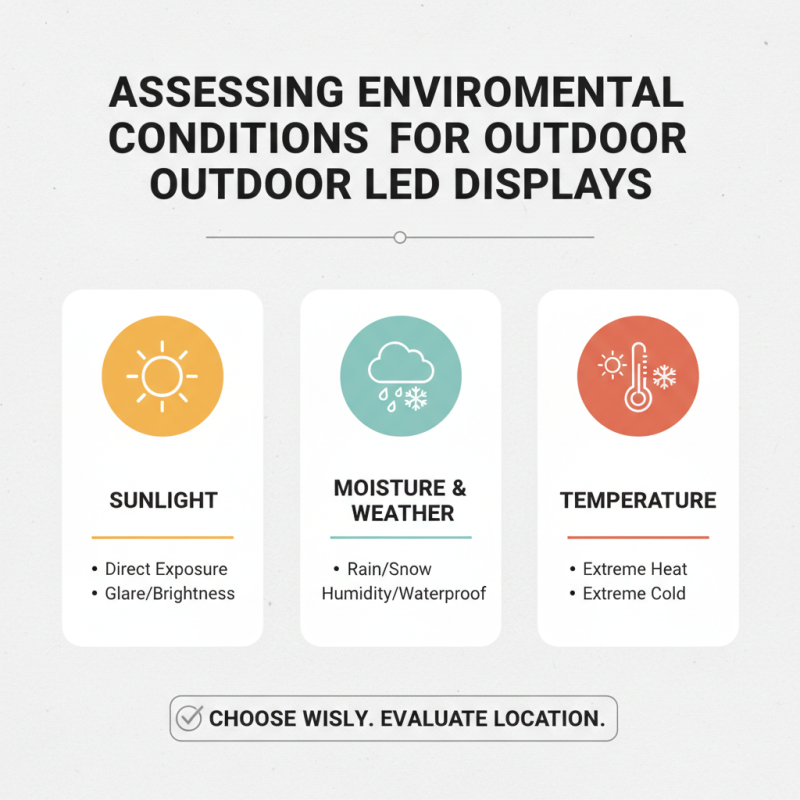
Think about where you'll use the screen. Will it be in direct sunlight or shaded areas? This impacts the brightness you require. Additionally, consider the content you will display. High-resolution screens are ideal for detailed visuals. Yet, they often come at a higher cost. Reflect on your budget and prioritize your needs. Not every feature may be necessary for your situation.
Understanding Your Outdoor Display Requirements
Choosing the right outdoor LED screen starts with understanding your specific display requirements. Different environments demand different features. For instance, a concert venue might prioritize brightness and clarity, while a sporting event needs durability and portability. According to a report from the Outdoor Advertising Association, over 70% of consumers notice digital billboards, highlighting the importance of effective visibility in outdoor displays.
Brightness is a crucial factor. Outdoor screens require higher lumens—at least 5,000 lumens—for clear visibility under sunlight. The pixel pitch also plays a significant role. A smaller pitch offers higher resolution but typically comes at a higher price. Many event planners overlook this detail, leading to suboptimal display quality. Additionally, glare and weather resistance must be considered. Screens with a high IP rating and anti-reflective coatings perform better in varying conditions.
Budget constraints often lead to compromises. It’s essential to balance cost with quality to avoid future regrets. An industry study revealed that poor display choices can diminish viewer engagement by 40%. Thus, investing time in understanding your needs, focusing on essential features, and keeping future maintenance in mind is vital. Analysis of your specific context will help you avoid common pitfalls and enhance viewer experiences.
Evaluating Different Types of Outdoor LED Screens
When choosing an outdoor LED screen, understanding the various types available is crucial. There are two main types: traditional and modular LED screens. Traditional screens provide a seamless display, ideal for large events. Their fixed installation often limits flexibility. In contrast, modular screens are versatile. These can be customized and reconfigured, offering a solution for different spaces and needs.
Consider brightness and resolution as key factors. High brightness levels ensure visibility in daylight. However, a higher resolution is necessary for detailed visuals. The pixel pitch affects clarity. A smaller pitch results in a sharper image, making it suitable for closer viewing distances. Large venues can use screens with a larger pitch since viewers are at a distance.
Don’t overlook environmental factors. The screen's durability against weather is vital. Outdoor screens must withstand wind, rain, and temperature fluctuations. Investing in a high-quality casing or protective features can be beneficial. Yet, it’s essential to balance cost with functionality. Sometimes the cheapest option may fall short in performance. Reflecting on your specific needs can guide you in choosing the right screen.
Outdoor LED Screens Comparison
Key Features to Consider in LED Screen Selection
Choosing the right outdoor LED screen requires careful consideration of various features. One key aspect is brightness. Outdoor settings often have varying light conditions. A screen with high brightness levels ensures visibility in direct sunlight. Look for at least 5,000 nits for effective outdoor display.
Another important feature is pixel pitch. This determines how close viewers need to stand for optimal viewing. A smaller pixel pitch means more detail at closer distances. However, this can increase costs, so evaluate your audience's distance before deciding.
Durability is essential as well. Outdoor screens must withstand weather elements like rain and wind. Choose screens with robust enclosures and weatherproof ratings. Maintenance can be overlooked, but regular checks are necessary to ensure longevity. Balancing these considerations can lead to a more effective and reliable outdoor display solution.
Comparing Costs and Budgeting for Your LED Screen Purchase
When budgeting for an outdoor LED screen, costs can vary significantly based on multiple factors. Industry reports suggest that high-quality outdoor LED screens can range from $10,000 to $250,000 or more. This wide price range depends on size, resolution, and features. Specific needs may impact total expenditure. For instance, a smaller screen with lower resolution will be less expensive than a large, high-definition display.
It's essential to consider additional costs beyond the screen itself. Installation expenses can add another 20-30% to your total budget. Maintenance should also be factored in; a report from the Society of Outdoor Display Experts noted that maintenance can cost between $1,000 and $2,500 annually. Reflecting on these elements can lead to better financial planning.
Many buyers overlook long-term operational costs. A recent survey reveals that energy consumption for LED screens can range from 500 to 1,500 watts. This variance impacts ongoing electricity costs. The initial investment could seem daunting, but understanding these aspects helps you make an informed decision. Keep in mind that affordability is subjective; what fits one budget may not be suitable for another. Consider all variables carefully.
How to Choose the Best Outdoor LED Screen for Your Needs? - Comparing Costs and Budgeting for Your LED Screen Purchase
| Type of LED Screen |
Resolution |
Size (inches) |
Brightness (nits) |
Cost ($) |
Best Use Case |
| P10 Outdoor LED |
10mm |
50" |
6000 |
2500 |
Billboards, Event Advertising |
| P5 Outdoor LED |
5mm |
55" |
8000 |
3500 |
Concerts, Large Events |
| P3 Outdoor LED |
3mm |
65" |
10000 |
5000 |
Stadiums, Sport Events |
| P2.5 Outdoor LED |
2.5mm |
70" |
12000 |
7500 |
Advertising, Retail Stores |
| P1.9 Outdoor LED |
1.9mm |
75" |
15000 |
9500 |
High-End Events, Broadcast |

















 Screen Size Calculator