How to Choose the Best Outdoor LED Screen?
Choosing the best outdoor led screen is not simply a matter of selecting the brightest model. The right choice depends on viewing distance, weather exposure, content type, maintenance access, and total operating cost. A screen beside a busy highway needs different specifications from one installed outside a shopping center. Small details matter. Pixel pitch affects image clarity. Front or rear service affects installation planning. Waterproof cabinets protect the display during heavy rain, but drainage and ventilation still require attention.
Bob Raikes, a long-time display industry analyst, offers a useful perspective: “Display quality is not just brightness; it is consistency, reliability, and application fit.” This principle should guide every comparison. A powerful outdoor led screen may look impressive in a showroom, yet perform poorly under direct sunlight if its brightness control is weak. A lower-cost product may also create unexpected expenses through frequent module replacement, difficult repairs, or high energy consumption.
This guide examines the practical factors behind a dependable purchase. It considers brightness, IP protection, refresh rate, cabinet construction, viewing distance, control systems, and warranty support. Real installation conditions will shape the final decision. Dusty roads, coastal air, freezing winters, and limited service space can change the requirements completely.
There is no perfect screen.
Even experienced buyers can misjudge pixel pitch or underestimate maintenance time. That is worth acknowledging. A careful evaluation, supported by technical documentation and supplier experience, can reduce those mistakes and produce a safer, clearer, and more reliable display investment.
What Is an Outdoor LED Screen and How Does It Work?
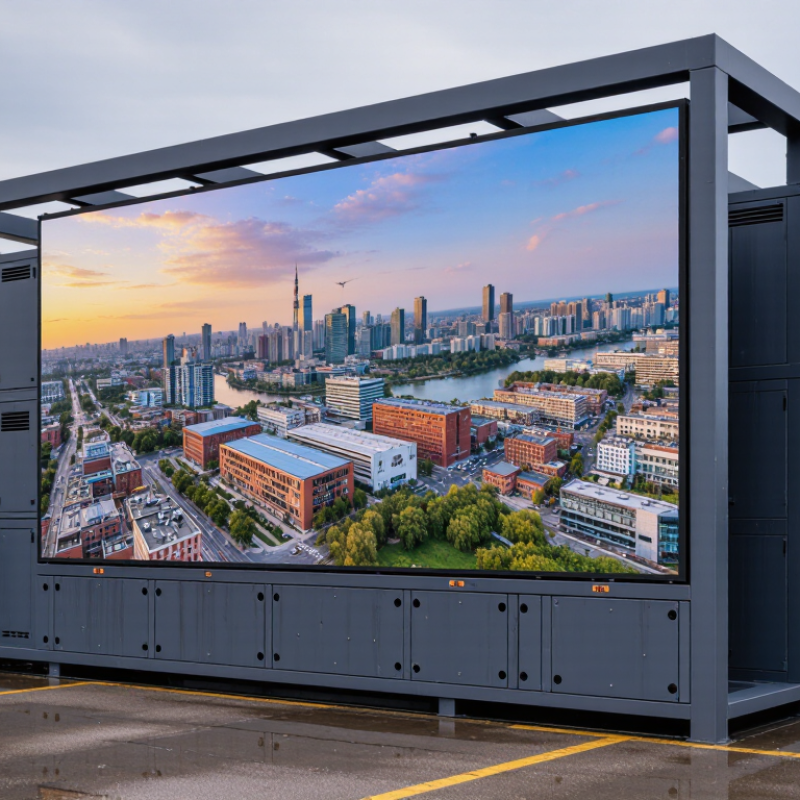
An outdoor LED screen is a modular, self-emitting display built for sunlight, rain, dust, and long viewing distances. Each pixel combines red, green, and blue light-emitting diodes. Their brightness levels mix into thousands of visible colors. The screen controller receives video data, divides it into cabinet sections, and sends signals to receiving cards. These cards drive LED modules row by row, often through pulse-width modulation. The process repeats rapidly, creating moving images that appear continuous to viewers.
Outdoor performance depends on engineering details, not only pixel count. A 2023 Grand View Research report valued the global LED display market at more than USD 7 billion, showing strong demand for large-format digital communication. However, market size does not prove display quality. The U.S. Department of Energy’s solid-state lighting reports also emphasize efficiency, thermal control, and optical performance as connected design factors. Heat remains a practical concern. Dark metal cabinets can become extremely hot under direct summer sunlight.
Weather protection should be checked against IEC 60529 ingress ratings. Many outdoor cabinets use an IP65-rated front surface, while the rear may require different protection. This difference is easy to overlook. I would also test brightness at the actual installation angle, because excessive brightness can wash out nearby details and waste energy. A high refresh rate helps cameras capture cleaner footage, although results depend on shutter settings. Specifications can mislead. Field testing is still necessary.
Which Display Specifications Matter for Outdoor Viewing?
How to Choose the Best Outdoor LED Screen?
Outdoor viewing begins with brightness, but brightness alone is not enough. Industry installation guides commonly place outdoor LED screens around 5,000–8,000 nits for direct sunlight. A shaded entrance may need far less. Excessive brightness can cause glare at night. CIE Publication 150:2017 emphasizes controlling obtrusive light, so request automatic brightness adjustment and scheduled nighttime settings.
Pixel pitch should match viewing distance. A practical estimate is one millimeter of pitch for roughly one meter of comfortable viewing distance, although content and eyesight change the result. Refresh rate also matters. A screen used for sports broadcasts or camera recording should typically exceed 3,840 Hz to reduce scan lines and flicker. Color consistency is often overlooked. Ask for measured brightness uniformity, not only a maximum figure.
Weather protection is non-negotiable. IEC 60529 defines IP ratings; IP65 generally indicates dust-tight protection and resistance to water jets. The enclosure still needs drainage, corrosion-resistant hardware, and thermal design. The U.S. Department of Energy’s 2023 Solid-State Lighting report notes laboratory LED packages exceeding 200 lumens per watt, but a complete display performs far lower because of drivers, cabinets, and cooling. A specification sheet can mislead. Check power use per square meter, especially during bright scenes. Leave room for maintenance access. Small gaps can become expensive mistakes.
How to Choose the Best Outdoor LED Screen?
Which display specifications matter most for outdoor viewing?
Brightness is a key outdoor specification. Typical peak brightness targets range from 3,000–5,000 nits in covered or shaded areas, 5,000–7,000 nits in normal daylight, and 7,000–10,000 nits for direct sunlight. The final choice should also consider pixel pitch, viewing distance, contrast, refresh rate, power consumption, and at least IP65 protection for exposed installations. Excessive brightness can create glare, so automatic brightness control is recommended.
How to Evaluate Weather Resistance and Installation Conditions?
Choosing an outdoor LED screen starts with weather resistance, not pixel pitch. IEC 60529 defines IP65 as dust-tight protection with resistance to water jets. It does not permit immersion. IP66 offers stronger water-jet protection, but neither rating guarantees performance in salt fog, freezing rain, or ultraviolet exposure. The enclosure, cable glands, connectors, and rear ventilation must share the same protection level. One weak opening can undermine the entire cabinet.
Use local climate evidence before selecting the screen. NOAA’s 1991–2020 Climate Normals provide 30-year temperature and precipitation records for many locations. Check the site’s hottest days, coldest nights, rainfall intensity, wind history, and snow load. A screen rated from -20°C to 50°C may still need cooling during direct summer sun. The displayed surface can become much hotter than the surrounding air. Leave airflow around power supplies, and avoid placing the cabinet beside dark walls that radiate heat.
Wind loading deserves careful engineering. The U.S. ASCE 7 standard uses site location, exposure, height, and gust conditions to calculate design pressure. Do not treat a heavy steel frame as automatically safe. Anchors need verified concrete strength, embedment depth, and corrosion protection. I have seen installation plans focus on the display while ignoring drainage beneath it. That is a costly oversight. Keep the lowest cabinet above splash zones, provide a service path, and inspect seals after transport. IP testing occurs under controlled conditions, not after years of vibration, dust, and repeated thermal expansion.
How to Choose the Right Screen Size, Resolution, and Brightness?
Choosing an outdoor LED screen begins with the audience, not the cabinet. Measure the farthest viewing position and the nearest standing point. A screen that looks sharp from a highway may appear coarse at five meters. Pixel pitch should match viewing distance; smaller pitch usually delivers finer detail but increases cost. I once selected a tight pixel pitch for a spacious plaza, and the extra detail was barely visible. That decision taught me to test content at real distances. Measure twice.
Resolution depends on screen dimensions, pixel pitch, and content. A large advertising display may need less fine detail than a compact information board. Check text, faces, and moving images on a sample panel before ordering. For brightness, assess direct sun, shade, and seasonal changes. Outdoor screens often need high luminance, but excessive brightness can disturb nearby surroundings and waste energy. Automatic brightness control helps respond to changing daylight. Ask for measured brightness in nits, not vague terms such as “ultra bright.”
Screen size should follow sightlines, available structure, and viewing time. A roadside display needs bold forms and brief messages. A venue screen can use more detail because viewers may remain longer. Consider aspect ratio, wind load, drainage, service access, and viewing angles. These details can change the usable size. Review local safety requirements with a qualified installer. Specifications can look impressive on paper. Real performance may differ. I compare daylight demonstrations before committing; calculations can miss glare, dust, or an awkward mounting height.
What Are the Key Costs, Maintenance Needs, and Safety Factors?
How to Choose the Best Outdoor LED Screen?
Purchase price is only the opening line. An outdoor LED screen also requires structural steel, electrical upgrades, permits, transport, and service access. Pixel pitch, cabinet size, brightness, and installation height can change the quotation dramatically. I would request a line-by-line cost schedule, not a single package price. The U.S. Department of Energy’s solid-state lighting reports commonly place LED rated life between 25,000 and 50,000 hours. That figure describes expected performance, not a maintenance-free promise.
Power consumption deserves careful attention. Ask for both average and maximum wattage, then calculate annual energy costs using local electricity rates. A screen running brightly for twelve hours daily may cost more than expected, especially during hot seasons. Scheduled brightness control can reduce waste and improve viewing comfort. However, software savings depend on proper setup. This is often overlooked. Dust, salt air, insects, and heat can damage filters, fans, connectors, and power supplies. Plan quarterly visual inspections and record failed modules, temperature readings, and cleaning dates. A spreadsheet can still miss real problems.
Safety begins with the site, not the display cabinet. IEC 60529 ratings help verify protection against dust and water, but an IP rating does not replace drainage, sealing, or correct installation. Wind loading should follow local structural requirements, with documented calculations and professional inspection. Electrical work should include grounding, overcurrent protection, and lockout procedures. Brightness also matters near roads and homes. CIE 150:2017 provides guidance on limiting obtrusive light, yet local rules may be stricter. I would test brightness at night from nearby viewpoints. Daytime approval is not enough.















 Screen Size Calculator