Top 10 Transparent Display Suppliers Worldwide
Transparent display technology is moving from laboratory demonstrations into retail, automotive, museums, and smart-building applications. Yet the market remains uneven. Commercial readiness differs sharply between transparent OLED, transparent LCD, projection systems, and emerging microLED designs.
Industry forecasts show strong interest, but their estimates vary widely. MarketsandMarkets has identified transparent displays as a high-growth segment through 2030. Grand View Research also expects expanding demand across automotive and consumer electronics. Meanwhile, IDTechEx highlights technical barriers, including limited brightness, viewing-angle performance, manufacturing yield, and high production costs. These differences matter. A bright showroom panel may perform poorly beside direct sunlight.
Transparent displays are not one product category.
As Nanosys CEO Jason Hartlove has stated, “Quantum dots are the next generation of display technology.” His observation is relevant because quantum-dot materials may improve color performance in future transparent and hybrid display architectures. However, materials alone will not solve every commercial problem. Installation conditions, maintenance access, content design, and power consumption remain decisive.
This guide evaluates the top 10 transparent display suppliers worldwide using practical criteria. These include product maturity, optical performance, manufacturing capability, customization, regional support, and documented deployments. Sources include MarketsandMarkets, Grand View Research, IDTechEx, Omdia, and DSCC industry reports. Company claims are treated carefully, because marketing language can exceed real-world performance.
The rankings are not permanent. The field changes quickly. Some promising suppliers may still lack large-scale evidence. That is worth remembering.
Transparent Display Technology: Definition, Structure, and Operating Principles
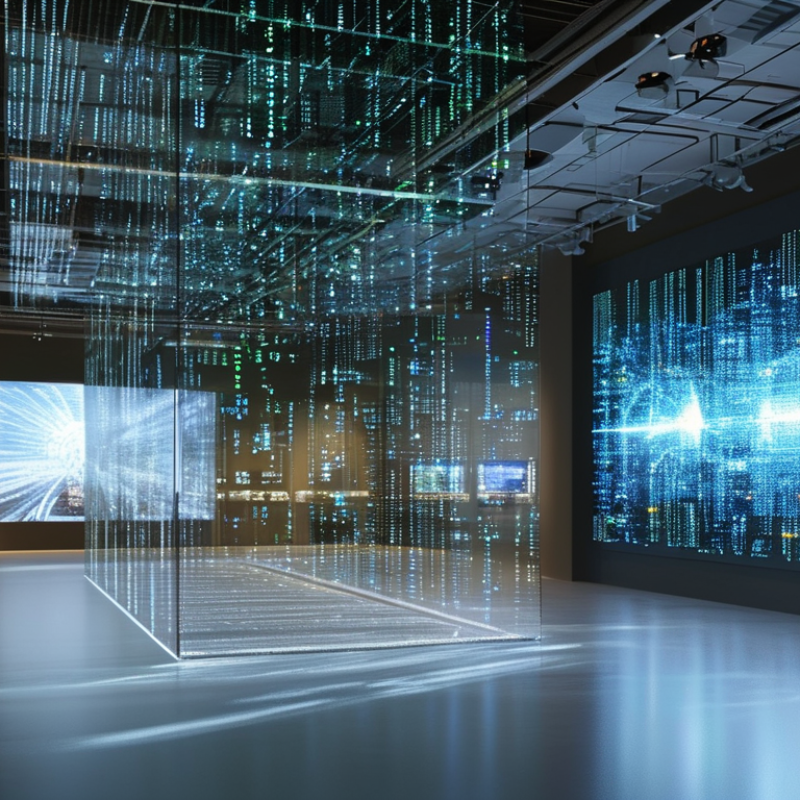
Transparent display technology creates images while allowing light to pass through the screen. It is used in retail windows, vehicles, museums, and interactive exhibits. The term sounds simple, but “transparent” does not mean invisible. Every display reduces background clarity to some degree.
A typical transparent display contains a clear substrate, conductive electrodes, pixel elements, driver circuits, and protective encapsulation. OLED versions use organic pixels that emit their own light. Transparent LED versions place tiny light-emitting diodes on a spaced substrate. Some LCD designs require a separate backlight, which can reduce openness and increase thickness. Optical films and clear adhesives also affect haze, color, and viewing quality.
During operation, control electronics send electrical signals to individual pixels. The pixels adjust brightness and color, while background light remains visible through unused areas. Dark images are difficult because the screen cannot fully block a bright background. Sunlight can also weaken contrast. Practical testing should examine transparency rate, luminance, viewing angle, heat, power use, and long-term stability. These figures may vary between laboratories and real installations. A display that performs well indoors may struggle beside a sunny street. This is an area where specifications need careful checking. Installation quality matters too. Dust, reflections, and uneven lighting can change the viewer’s experience.
Key Criteria for Evaluating Global Transparent Display Suppliers
Top 10 Transparent Display Suppliers Worldwide
Key Criteria for Evaluating Global Transparent Display Suppliers
Evaluating transparent display suppliers requires more than comparing quoted prices. Optical performance should be tested under controlled lighting, not only shown in polished videos. Check transparency, brightness, contrast, color accuracy, and viewing angles. A clear image in a dark showroom may look weak beside a sunlit window. Ask for measured data, sample units, and independent test records. Suppliers with engineering experience should explain pixel structure, glass thickness, heat management, and installation limits in plain language.
Reliability depends on manufacturing control. Review quality procedures, panel uniformity checks, dust protection, electrical safety, and product aging tests. Request evidence of relevant international certifications and traceable component sourcing. A serious supplier can describe failure rates, replacement procedures, and expected service life without making vague promises. Ask whether the display supports your content system, touch functions, brightness sensors, and required operating temperature. Small compatibility issues can delay an entire installation.
Support after delivery matters just as much. Evaluate documentation, remote diagnostics, spare-part access, response times, and local service capability. Visit a completed project when possible, then inspect edges, cables, mounting frames, and image consistency. Real installations reveal details that brochures hide. Cost should include transport, calibration, maintenance, energy use, and future repairs. The lowest quotation may become expensive later. However, even experienced suppliers can misjudge a difficult site. Demand a pilot installation and record every assumption before signing.
| Rank | Anonymous Supplier Profile | Primary Production Region | Transparent Display Technology | Typical Transparency Range | Common Display Sizes | Typical Resolution Range | Touch and Integration Options | Typical Application Strength | Quality and Compliance Indicators | Estimated Commercial Lead Time | Evaluation Score |
|---|---|---|---|---|---|---|---|---|---|---|---|
| 1 | Supplier Profile 01 Large-scale transparent OLED specialist with strong custom-engineering capability. |
East Asia | Transparent OLED panels; self-emissive architecture with no conventional backlight. | Approximately 30%–45%, depending on content, panel structure, and operating conditions. | Approximately 30–80 inches; larger commercial configurations may be assembled from multiple modules. | Full HD to 4K-class configurations. | External touch frameOptical bondingMedia-player integration | Retail windows, museums, premium showrooms, transportation interiors. | Documented panel specifications; display lifetime data; regional electrical and electromagnetic compliance available by project. | 8–16 weeks for standard configurations; longer for customized projects. | 9.4 / 10 |
| 2 | Supplier Profile 02 Transparent LED manufacturer focused on high-brightness architectural and window installations. |
East Asia | Fine-pitch transparent LED mesh or LED grille with open visual structure. | Approximately 60%–90%, mainly influenced by pixel pitch and cabinet design. | Custom sizes; commonly used for façades, storefronts, stages, and large indoor walls. | Low-resolution to high-resolution large-format video walls; pixel pitch is project-dependent. | Front serviceOutdoor protectionAsynchronous control | Building façades, shopping centers, airports, live events, large retail windows. | Ingress-protection options, thermal testing, brightness specifications, and standard LED module documentation. | 6–12 weeks for standard modules; installation time varies by site. | 9.1 / 10 |
| 3 | Supplier Profile 03 Glass-based transparent display integrator specializing in interactive commercial installations. |
East Asia | Transparent LCD or laminated glass display system using a dedicated illumination structure. | Approximately 70%–90% when the display is inactive; active-image transparency depends on lighting and content. | Approximately 22–86 inches, with custom glass sizes available through project integration. | Full HD and 4K-class options. | Projected capacitive touchPCAP overlayCMS support | Retail cabinets, product showcases, corporate experience centers, museums. | Glass safety documentation, touch-controller compatibility testing, and commercial display service support. | 8–14 weeks, depending on glass processing and touch configuration. | 8.8 / 10 |
| 4 | Supplier Profile 04 Transparent LED film provider designed for retrofitting glass surfaces with minimal structural load. |
East Asia | Adhesive transparent LED film or flexible LED strip matrix. | Approximately 80%–95% for the inactive viewing area. | Custom rectangular layouts; suitable for shop windows and curved or segmented glass surfaces. | Pixel pitch commonly selected according to viewing distance and required image detail. | Self-adhesive installationRemote monitoringCloud CMS | Storefront advertising, exhibitions, wayfinding, brand activation, event windows. | Low-weight construction, brightness-control documentation, power-consumption data, and installation guidelines. | 5–10 weeks for standard film systems. | 8.6 / 10 |
| 5 | Supplier Profile 05 Specialized transparent OLED integrator serving automotive, mobility, and premium interior projects. |
East Asia and Europe | Transparent OLED or transparent display module integrated into a vehicle or interior assembly. | Approximately 30%–45%, depending on panel specification and protective layers. | Small and medium custom formats; typically designed for dashboards, partitions, or display counters. | Full HD-class and custom resolutions. | Embedded electronicsAutomotive interfacesCustom mechanical design | Automotive demonstrations, smart mobility, luxury interiors, design prototypes. | Environmental testing, vibration testing, temperature-cycle testing, and project-specific safety validation. | 12–24 weeks for engineering samples and customized assemblies. | 8.4 / 10 |
| 6 | Supplier Profile 06 Transparent display distributor and system house with broad multi-technology sourcing capability. |
North America and Europe | Multi-sourced transparent OLED, transparent LED, and transparent LCD solutions. | Approximately 30%–90%, depending on the selected technology. | Approximately 22–100 inches; custom large-format systems available through integration partners. | Full HD to 4K-class configurations. | Touch integrationDigital signageInstallation service | Retail, education, hospitality, museums, corporate communication. | Supplier qualification procedures, warranty terms, system testing, and regional service coverage. | 6–14 weeks for stocked or semi-standard systems. | 8.2 / 10 |
| 7 | Supplier Profile 07 Architectural LED specialist with emphasis on lightweight transparent façades and creative structures. |
Europe and East Asia | Transparent LED mesh, bar-type LED, or custom architectural LED modules. | Approximately 65%–92% depending on module spacing and viewing angle. | Large custom surfaces; dimensions are generally engineered around the building structure. | Resolution selected according to viewing distance; fine pitch is available for closer viewing. | Structural engineeringOutdoor controlBrightness scheduling | Façades, atriums, public art, airports, stadiums, and cultural venues. | Wind-load engineering, thermal management, outdoor protection options, and installation documentation. | 10–20 weeks, excluding permitting and construction work. | 8.0 / 10 |
| 8 | Supplier Profile 08 Transparent LCD cabinet supplier serving retail display and product-merchandising programs. |
East Asia | Transparent LCD cabinet with integrated LED illumination and enclosed product-display space. | Approximately 70%–90% when the LCD image is inactive. | Approximately 22–55 inches; cabinet dimensions are customizable. | Full HD is common; 4K-class options may be available for selected sizes. | Touch optionalBuilt-in lightingAndroid or media player | Refrigerated displays, consumer electronics, cosmetics, luxury goods, and retail showcases. | Electrical safety documentation, cabinet thermal testing, standard warranty, and replacement-part support. | 6–12 weeks for standard cabinet formats. | 7.8 / 10 |
| 9 | Supplier Profile 09 Flexible transparent LED and film-display supplier serving temporary and portable installations. |
East Asia | Flexible transparent LED film, mesh, or lightweight modular LED display. | Approximately 75%–95%, depending on LED density and protective coating. | Custom sizes; suitable for temporary walls, curved windows, exhibitions, and events. | Resolution varies widely with pixel pitch and viewing distance. | Flexible mountingLightweight modulesWireless control options | Exhibitions, events, pop-up retail, entertainment, and short-term advertising. | Module-level testing, brightness-control specifications, packing standards, and installation training. | 4–9 weeks for standard products. | 7.6 / 10 |
| 10 | Supplier Profile 10 Custom display engineering company offering small-batch transparent prototypes and specialized assemblies. |
North America, Europe, and East Asia | Project-specific transparent OLED, transparent LCD, or transparent LED assembly. | Approximately 30%–90%, depending on the selected display architecture. | Small to medium custom formats; suitable for prototypes and limited production runs. | HD, Full HD, and custom resolutions depending on the base panel. | Prototype engineeringCustom electronicsMechanical integration | Research projects, product prototypes, trade-show displays, specialist industrial equipment. | Design-for-manufacturing review, prototype validation, electrical testing, and documented change control. | 8–18 weeks for prototypes; production timing depends on component availability. | 7.4 / 10 |
Top 10 Transparent Display Suppliers by Technology and Market Reach
Transparent display suppliers now compete through technology, integration, and geographic reach. A useful top-ten comparison should not rely on showroom brightness alone. It should examine optical clarity, viewing angle, contrast, power use, service capacity, and proven installation experience.
The strongest suppliers usually specialize in one of four areas. Transparent OLED panels deliver rich contrast for retail windows and museum exhibits. Transparent LED systems offer larger formats, higher brightness, and stronger outdoor visibility. Projection-film suppliers support flexible glass surfaces, though sunlight can reduce image impact. Smart-glass specialists combine display functions with privacy control, which suits offices, vehicles, and premium hospitality spaces.
Market reach separates capable manufacturers from dependable project partners. The leading ten suppliers typically maintain regional engineering teams, standardized replacement parts, and testing facilities near major commercial markets. Some serve global retail chains, while others focus on transportation hubs, architectural façades, or vehicle interiors. That difference matters. A supplier may produce an excellent panel but struggle with customs, installation tolerances, or local maintenance.
This ranking has limits. Technology changes quickly, and published specifications may not reflect performance after months of dust, heat, or repeated operation. Buyers should request live demonstrations, sample measurements, warranty terms, and energy data under real lighting. Ask about failure rates, too. It is an uncomfortable question, but a necessary one. A transparent display is only successful when viewers see the content clearly, installers can service it safely, and the system remains practical after the launch event.
Top 10 Transparent Display Suppliers Worldwide
Technology Capability and Market Reach Index
The chart compares anonymous supplier profiles using a normalized 0–100 index. Technology capability reflects transparent OLED, transparent LCD, transparent LED and microLED expertise, while market reach reflects geographic coverage, production scale, system integration and commercial deployment. The index is intended for category-level comparison rather than company-reported financial ranking.
Product Applications Across Retail, Automotive, Architecture, and Industry
Top 10 Transparent Display Suppliers Worldwide
Transparent displays are moving beyond demonstrations into practical retail, automotive, architectural, and industrial environments. MarketsandMarkets projects the transparent display market to grow from about USD 1.6 billion in 2023 to USD 5.1 billion by 2028, representing a 26.7% compound annual growth rate. Retail stores use see-through screens on refrigerated doors, window panels, and product showcases. They can display pricing while keeping merchandise visible.
Automotive applications demand higher reliability. Transparent head-up displays can place navigation cues across a driver’s forward view, although brightness and glare remain difficult in direct sunlight. In architecture, transparent LED walls support museums, airports, and office façades without fully blocking daylight. Industrial users apply them to machine windows, control-room panels, and training equipment. The International Energy Agency reported that buildings account for around 30% of global final energy consumption, so display suppliers should consider heat output and power efficiency. A bright screen is not automatically a sustainable screen.
Tips: Compare optical clarity, contrast, viewing angle, refresh rate, installation depth, and service access. Ask for measured performance under real lighting. A showroom test is not enough. Supplier rankings should also examine warranty terms, calibration support, replacement lead times, and compliance documentation. The market still has gaps. Some prototypes look impressive but struggle with dust, heat, fingerprints, or complex content management. That weakness deserves honest evaluation before large-scale deployment.
Comparison of Supplier Capabilities, Customization, and Support Services
Top 10 Transparent Display Suppliers Worldwide
Comparison of Supplier Capabilities, Customization, and Support Services
Choosing among the top ten transparent display suppliers requires more than comparing panel brightness. MarketsandMarkets estimated the global transparent display market at USD 1.1 billion in 2023. It forecasts USD 2.4 billion by 2028. This growth makes supplier resilience a practical purchasing test. Ask for measured transparency, luminance, viewing angle, lifetime, and failure-rate data. Numbers matter.
Capability separates catalogue sellers from engineering partners. Strong suppliers should demonstrate stable lamination, thermal control, touch integration, and optical calibration. A 2.5-metre retail showcase may need different bonding methods than a vehicle display. Customization should cover active area, glass thickness, interface protocols, brightness control, and enclosure design. IDTechEx’s 2024 transparent electronics research identifies cost and manufacturability as continuing adoption barriers. That caveat deserves attention. A specification sheet can still hide assembly weaknesses.
Support quality often decides whether a pilot becomes a repeat order. Compare prototype lead times, remote diagnostics, spare-panel policies, installation training, and warranty response targets. Regional technicians can reduce downtime when calibration drifts or a connector fails. Ask for a named project manager and a written escalation path. ISO 9001 certification helps, but it cannot replace traceable test records or field references. Independent verification is wiser. Supplier scoring should include these service details, not only unit price.
Related Posts
-
2025 Guide: How to Choose the Best Transparent LED Screen for Your Business
-
How to Choose the Best Transparent LED Screen for Your Needs?
-
How to Choose the Right Display Screen for Your Needs?
-

Top Touch Screen Monitor Trends to Watch in 2025
-
How to Choose the Best Display Screen for Your Home Office Setup
-
Top Outdoor Monitors in China for Global Buyers to Consider?