What Are the Top China Touch Panel Manufacturers?
China has become a major base for touch panel manufacturing, serving smartphones, industrial equipment, vehicles, medical devices, and smart home products. Yet choosing the right supplier requires more than comparing website claims or production capacity.
This guide examines leading China touch panel manufacturers through practical purchasing criteria. These include touch technology, cover glass quality, optical bonding, controller compatibility, customization capability, and quality control. A reliable manufacturer should explain its process clearly, from raw glass inspection to final display testing. Buyers should also review sample performance, factory certifications, delivery records, and after-sales support. Small details matter, such as edge smoothness, glove response, surface coating, and performance under changing temperatures.
No ranking is perfect.
The “top” manufacturer depends on the application, budget, order volume, and required durability. A supplier experienced in mobile displays may not suit a rugged industrial terminal. Similarly, a large factory may offer strong capacity but less flexibility for small batches. This article compares notable Chinese touch panel manufacturers with a balanced view of their strengths, limitations, and typical applications. It also considers communication quality, engineering support, and the supplier’s willingness to identify problems honestly. That last point is often overlooked. A capable partner should not promise everything without discussing technical risks. By combining market knowledge with practical evaluation, readers can make a more informed decision when sourcing a touch panel for long-term production.
What Defines a Leading China Touch Panel Manufacturer?
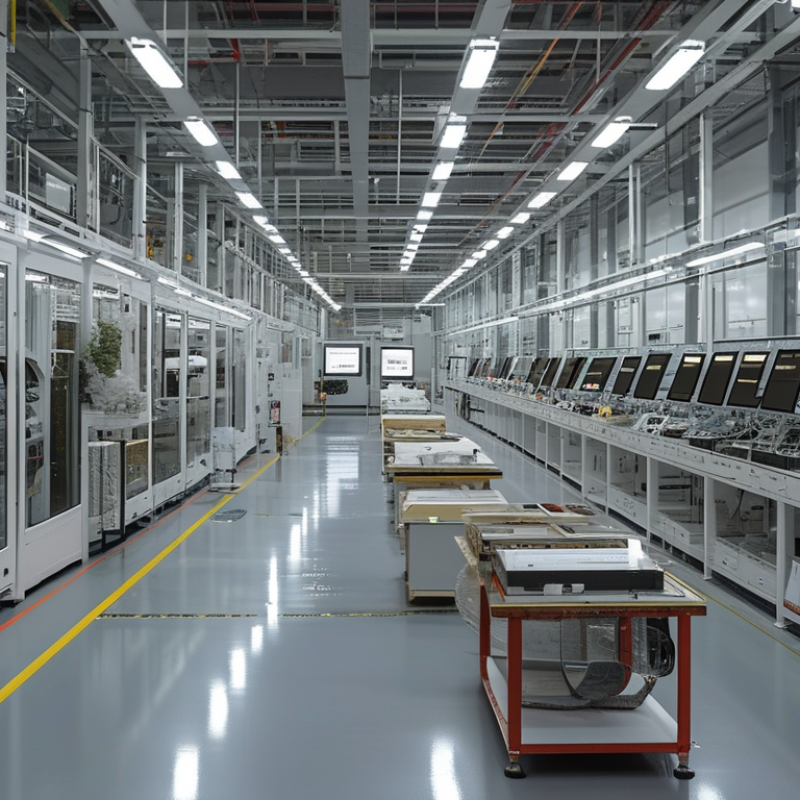
A leading China touch panel manufacturer is defined by more than factory size or export volume. In practical sourcing, consistent performance matters most. Engineers should inspect cleanroom controls, lamination lines, and incoming-material testing. A bright sample proves little. Long-term stability matters.
Reliable manufacturers explain their process clearly, from glass cutting to final optical inspection. They provide measurable data for sensitivity, haze, hardness, response time, and operating temperature. They also maintain lot traceability, calibrated equipment, and documented corrective actions. These details show professional control rather than sales confidence.
I would request samples from different production lots and test them with the intended display, gloves, moisture, and repeated touches. Small differences often appear there. A supplier that welcomes controlled failure testing deserves more trust.
Technical support is another defining factor. Skilled teams can adjust sensor patterns, cover-glass thickness, and controller settings without hiding trade-offs. They should discuss tooling costs, minimum order quantities, lead times, and after-sales responsibility in writing.
Be careful with impressive claims. Some factory audits focus too heavily on polished showrooms. An honest manufacturer admits limitations, including edge sensitivity or restricted customization. That honesty can feel inconvenient, but it protects product development. My own evaluation would also include response speed, engineering records, and consistency after several months. No single certificate can replace evidence from production.
How China’s Touch Panel Manufacturing Industry Is Structured
China’s touch panel manufacturing industry is not one market. It is a layered supply chain. Upstream firms produce cover glass, sensor films, conductive materials, driver components, and bonding adhesives. Panel makers then form touch sensors and display assemblies. Module integrators add controllers, optical bonding, testing, and protective glass.
The scale is substantial. Omdia’s 2024 display capacity analysis places China above 70% of global TFT LCD capacity, creating a strong base for integrated touch modules.
Meanwhile, MarketsandMarkets projects the global touch screen market to grow from about USD 81 billion in 2023 to over USD 110 billion by 2028.
These figures include several touch technologies, so they should not be treated as China-only panel revenue.
The strongest manufacturers usually compete through process control, not factory size alone. Their advantages include high-yield glass processing, fine-line sensor patterning, fast custom tooling, and stable quality testing.
Automotive, industrial, medical, and consumer applications require different specifications. Automotive panels demand vibration resistance and long service life. Industrial screens often need glove operation and strong sunlight readability.
A shipment ranking can mislead. Some suppliers focus on large-volume consumer modules, while others serve smaller, higher-margin projects. Public reports also rarely separate sensor production from complete touch-display modules. That gap makes direct comparisons difficult.
Buyers should examine yield rates, qualification records, bonding capability, and after-sales response, not only annual capacity.
The structure is efficient, but not flawless. Suppliers still face pressure from price competition, uneven demand, and dependence on specialized materials.
Which Technologies and Products Do Top Manufacturers Provide?
Leading China touch panel manufacturers compete through technology depth, not only production volume. Their core offerings include projected capacitive panels, resistive touchscreens, and sensor-integrated displays. Projected capacitive technology dominates phones, vehicle consoles, and retail terminals because it supports multi-touch and thin glass surfaces. Resistive panels still matter in factories, where operators may wear gloves or use a stylus.
Products now extend beyond standard cover glass. Manufacturers provide touch modules, optical bonding, anti-glare treatments, flexible sensors, and display assemblies. Some also develop in-cell and on-cell solutions, which reduce thickness by integrating touch functions into the display structure. Automotive programs increasingly request large curved panels, haptic feedback, and operation under rain or temperature changes. Medical and industrial buyers usually prioritize chemical resistance, long service life, and stable calibration over fashionable design.
Fortune Business Insights estimated the global touchscreen market at USD 76.17 billion in 2023. Its report projects USD 99.84 billion by 2030, although market definitions differ across studies. That limitation matters. A supplier may report strong shipment growth while earning less from commoditized panels. Omdia’s display research also highlights expanding automotive display areas, supporting demand for larger touch interfaces. Yet larger is not always better. Poor software scaling, fingerprints, and glare can weaken an otherwise advanced panel. Buyers should test brightness, response time, bonding quality, and failure rates in real operating conditions. Supplier claims need independent verification.
How to Compare China Touch Panel Manufacturers
China’s touch panel sector offers strong manufacturing depth, but supplier comparison needs more than price checks. Fortune Business Insights reported that the global touchscreen market reached about USD 76.87 billion in 2023. It also forecasts continued growth through 2030. Definitions vary between reports, however. That difference matters when building a sourcing plan.
Request identical samples from each shortlisted manufacturer. Test gloved operation, wet fingers, sunlight readability, and palm rejection. Check whether the panel supports your controller, cover glass, and operating system. Ask for measured response time, optical transmittance, surface hardness, and operating temperature. These figures should come from test records, not sales promises. A low quote can still lose the project.
Quality systems deserve equal attention. Review ISO 9001 certification, incoming inspection, aging tests, cleanliness controls, and traceability by production lot. Ask for sample yield, field-failure data, minimum order quantity, and normal lead time. UL, CE, RoHS, and REACH documentation may be necessary, depending on the destination market. Compare total cost, including tooling, packaging, replacement units, and engineering support. IDC’s manufacturing research consistently links supply-chain visibility with stronger operational resilience, yet smaller suppliers may provide faster engineering feedback. That advantage is real, but it needs evidence. I would use a weighted scorecard and revisit it after pilot production. Supplier claims are not proof.
| Evaluation Dimension | Typical Industry Capability or Range | What to Compare | Recommended Evidence to Request |
|---|---|---|---|
| Touch Technology | Projected capacitive touch is the most common choice for modern displays. | Compare projected capacitive, resistive, infrared, and surface-acoustic-wave solutions according to the application, operating environment, glove use, and required accuracy. | Technology specification, touch-controller details, sample performance results, and application references without confidential customer information. |
| Display Size and Aspect Ratio | Small control panels through large-format interactive displays are commonly available. | Check active area, overall outline dimensions, aspect ratio, thickness, viewing direction, and the ability to support custom cutouts or non-standard shapes. | Dimension drawings, CAD files, tolerance tables, and a sample matching the final mechanical design. |
| Cover Glass Options | Common options include chemically strengthened glass, anti-glare surfaces, anti-fingerprint coatings, and printed borders. | Compare glass thickness, surface treatment, edge shape, optical clarity, hardness claims, and resistance to cleaning chemicals. | Material declaration, coating data sheet, surface-hardness test method, and chemical-resistance test report. |
| Optical Performance | Performance depends on cover glass, display module, bonding method, and surface treatment. | Compare transmittance, reflectance, haze, contrast impact, brightness loss, and readability under direct or indirect sunlight. | Optical test report using clearly stated test conditions and a bonded engineering sample. |
| Bonding Method | Air bonding and optical bonding are both used; optical bonding generally improves outdoor readability and resistance to internal reflections. | Evaluate bonding material, bubble control, alignment accuracy, repairability, thermal expansion behavior, and expected service environment. | Process description, bonding uniformity inspection records, environmental test results, and sample validation data. |
| Touch Accuracy and Responsiveness | Performance varies with panel size, controller settings, firmware, glove type, and moisture conditions. | Compare minimum touch object size, response time, multi-touch capability, palm rejection, wet-finger operation, and performance with gloves. | Test protocol, measured response results, multi-touch demonstration, and test samples configured for the intended operating conditions. |
| Environmental Resistance | Industrial designs may require operation across a wide temperature and humidity range, depending on the end product. | Compare operating and storage temperature, humidity resistance, vibration, shock, water or dust protection, and resistance to repeated cleaning. | Environmental qualification reports, ingress-protection documentation where applicable, and test conditions based on recognized standards. |
| Electrical Interfaces | Common touch interfaces include USB and serial communication; display interfaces may include LVDS, eDP, MIPI, or HDMI depending on the module. | Check connector type, cable length, voltage requirements, operating-system compatibility, electromagnetic compatibility, and firmware support. | Interface control document, pinout, communication protocol, driver package, and compatibility test results. |
| Customization Capability | Many suppliers support custom dimensions, glass artwork, connector positions, flex-cable routing, and touch-controller tuning. | Compare engineering resources, tooling ownership, drawing review process, sample iteration speed, and ability to manage integrated display-touch assemblies. | Engineering change procedure, sample-development schedule, tooling quotation, and a clearly defined approval process. |
| Quality Management | A mature supplier should use documented incoming, in-process, and final inspection controls. | Compare traceability, automated inspection, calibration management, defect classification, corrective-action procedures, and process-capability monitoring. | Quality certificate, inspection plan, sample inspection report, traceability example, and corrective-action template. |
| Compliance Documentation | Applicable requirements depend on the destination market and the final product configuration. | Check support for relevant environmental, chemical, electromagnetic, safety, and product-specific compliance requirements. | Declarations of conformity, material declarations, restricted-substance reports, and test reports from qualified laboratories when required. |
| Prototype and Mass-Production Support | A reliable supplier should be able to support design verification, pilot production, and controlled ramp-up. | Compare prototype quantity flexibility, sample lead time, production capacity, capacity-reservation practices, and escalation procedures. | Project schedule, pilot-production plan, capacity statement, production-line audit results, and named technical contact roles. |
| Minimum Order Quantity | Minimum order quantities vary significantly with customization, tooling, materials, and production-line requirements. | Compare prototype MOQ, first production MOQ, repeat-order MOQ, tooling charges, and the treatment of engineering samples. | Written quotation separating unit price, tooling, non-recurring engineering, sample fees, packaging, and shipping terms. |
| Lead Time and Supply Stability | Lead time is affected by glass processing, controller availability, bonding, testing, order volume, and customization. | Compare sample lead time, standard production lead time, material planning, alternate components, safety-stock policy, and change-notification procedures. | Production schedule, material lead-time list, supply-continuity plan, and formal change-control policy. |
| Total Cost of Ownership | The lowest unit price does not always represent the lowest project cost. | Include tooling, engineering, testing, packaging, logistics, warranty handling, yield, field replacement, and redesign risk in the comparison. | Comparable total-cost quotation, warranty terms, failure-analysis process, and lifecycle-support statement. |
| Communication and Technical Support | Effective support requires timely engineering communication and clear ownership of technical issues. | Compare response time, language capability, design-review quality, documentation accuracy, issue escalation, and after-sales support. | Project communication plan, design-review records, support-service levels, and sample issue-resolution workflow. |
What Industries Use Touch Panels Made in China?
What Are the Top China Touch Panel Manufacturers?
What Industries Use Touch Panels Made in China?
Touch panels made in China serve far more than consumer electronics. Automotive dashboards use projected-capacitive panels for navigation, climate control, and vehicle settings. Omdia reports that global automotive display shipments remain above 150 million units annually, supporting continued demand for durable in-car interfaces. These panels must withstand vibration, sunlight, temperature changes, and gloved operation.
Industrial automation is another major user. Factory equipment, CNC machines, and warehouse terminals often require bright displays, sealed bezels, and reliable ten-point touch. Grand View Research identifies industrial automation as a significant growth area for human-machine interfaces, with demand linked to smart manufacturing investment. In practice, engineers check IP65 protection, electromagnetic compatibility, and response stability before approving a panel.
Healthcare facilities use touch panels on diagnostic devices, patient monitors, and mobile carts. Retail kiosks, hotel check-in systems, and public transport ticketing machines also depend on them. Fortune Business Insights estimates the global touchscreen display market will continue expanding through the next decade, driven by automotive, medical, and commercial applications. Yet market growth does not guarantee quality. A panel that performs well in a showroom may fail under disinfectant, direct glare, or repeated impact. That weakness deserves more attention. Buyers should review life-cycle testing, optical bonding results, supplier audits, and after-sales data, not only price or resolution.
Related Posts
-
10 Best Touch Panel Innovations Transforming User Experience?
-

Why Choose a Touch Panel for Your Business Needs?
-

2026 Best Touch Screen Technologies for Global Buyers?
-

Explore the Best LCD Monitor Options in China for Every Need?
-
Understanding the Evolution of LCD Monitors: From Early Days to Modern Innovations
-

What is Outdoor LCD Display and How Does It Benefit Businesses?