Enquire Now
Enquire Now

At Pro Display we’re always happy to help you select the very best display technology for your project.

If you require any further information, pricing or technical assistance, please call us, or send us a message through the form below.

You can also sign-up to our mailing list here too.

    2026 Best Advertising Screen Display Types for Buyers?

    Choosing an advertising screen display in 2026 is no longer a simple size comparison. Buyers must match the screen with its environment, audience, content, and operating budget. A bright LED wall may attract attention outside a shopping center. However, it can waste energy in a small indoor store. An LCD display may deliver sharper close-up details. It may also struggle under direct sunlight.

    Industry consultant Lyle Bunn has often stated, “Digital signage is not a technology; it is a communications medium.” That principle remains useful for every advertising screen display decision. The best choice supports a clear business purpose. It should guide customers, promote products, or explain services without creating visual noise. This guide examines outdoor LED, indoor LCD, transparent LED, interactive kiosks, video walls, and emerging display formats for 2026 buyers.

    Real purchasing experience shows that specifications alone can mislead. Brightness, pixel pitch, viewing distance, heat control, weather protection, and service access all affect long-term value. Content scheduling matters too. A premium screen with poor content can still feel lifeless. That is an uncomfortable truth.

    Our comparison also has limits. Prices vary by region, installation conditions, software, and warranty terms. New display technologies may improve quickly, but early adoption can involve uncertain maintenance costs. Buyers should request demonstrations, inspect running content, and calculate total ownership costs before signing an order. The right advertising screen display is not always the largest or newest model. It is the one that remains readable, reliable, measurable, and useful after the launch excitement fades.
    2026 Best Advertising Screen Display Types for Buyers?

    What Are the Main Types of Advertising Screen Displays?

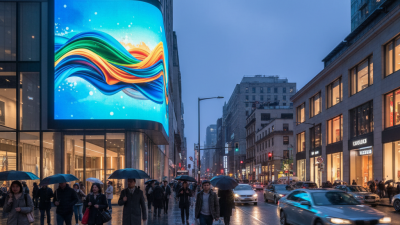
    Advertising screen displays now come in several practical formats, each serving a different viewing condition. LCD commercial displays suit shops, reception areas, and indoor menus. They offer sharp text and controlled brightness. LED video walls work better in airports, plazas, and large halls. Their modular panels create larger images and stronger visibility from a distance. Transparent LED screens add content without fully blocking glass storefronts. However, they can look less natural under direct sunlight.

    Interactive kiosks combine a display with touch functions, payment tools, or wayfinding software. They support self-service, but they require careful accessibility testing and regular maintenance. Projection systems remain useful for temporary events and wide wall surfaces. They usually need dim lighting, which limits everyday retail use. Grand View Research estimated the global digital signage market at about USD 27 billion in 2024. The report also forecasts continued growth through 2030. OAAA reported approximately USD 9.1 billion in United States out-of-home advertising revenue during 2023. Digital formats represented a significant share of that market.

    Tips: Match the screen to distance, ambient light, viewing angle, and content length. Measure brightness at the installation site, not only in a showroom. For outdoor LED, check weather protection and service access. For kiosks, test touch response with gloves and wet fingers. No format wins every site. Buyers sometimes overvalue screen size and undervalue maintenance. That assumption deserves a second look. A smaller, brighter screen can perform better than a massive display with weak content.

    How Do Indoor and Outdoor Advertising Screens Differ?

    2026 Best Advertising Screen Display Types for Buyers?

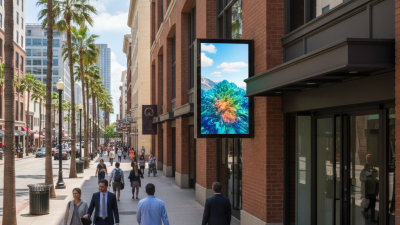
    Indoor and outdoor advertising screens serve different viewing conditions, not just different locations. Indoor displays usually work with controlled lighting, shorter viewing distances, and quieter environments. A screen in a shopping mall may need accurate colors and sharp text more than extreme brightness. Outdoor displays face sunlight, rain, dust, temperature changes, and vandalism risks. They need high brightness, weather protection, strong cooling, and readable content from a distance.

    Brightness matters greatly. Indoor screens commonly perform well around 500–1,000 nits, while outdoor models may require 3,000 nits or more under direct sunlight. Outdoor buyers should also examine IP ratings, thermal management, and automatic brightness control. A bright screen is not always a better screen. It can waste energy and create glare.

    The numbers support outdoor demand. The Out of Home Advertising Association of America reported U.S. out-of-home advertising revenue above 9 billion dollars in 2023. PQ Media’s 2024 Global Digital Out-of-Home Forecast also recorded continued expansion in digital outdoor advertising. Indoor networks benefit from controlled conditions and easier maintenance. Outdoor networks offer wider public reach, but installation and service costs can rise quickly. That difference is easy to underestimate. A practical buyer should test content at the real viewing distance, measure sunlight across the day, and calculate total ownership costs. Some purchasing decisions still focus too heavily on screen size.

    2026 Best Advertising Screen Display Types for Buyers

    How do indoor and outdoor advertising screens differ?

    Outdoor advertising screens generally require much higher brightness than indoor displays to remain readable in direct sunlight. Typical peak brightness is approximately 300–700 nits for indoor LCD screens, 800–1,500 nits for indoor LED screens, 1,500–3,000 nits for high-brightness outdoor LCD screens, and 5,000–10,000 nits for outdoor LED screens. Actual specifications vary by product, viewing distance, ambient light, weather protection, and installation environment.

    Which Display Technologies Suit Different Advertising Goals?

    Advertising screens should match the campaign objective, not the showroom excitement. For broad awareness, large LED displays deliver scale, motion, and strong visibility across roads, plazas, and transport hubs. The World Out of Home Organization’s Global Expenditure Report 2024 shows digital out-of-home advertising gaining share within total out-of-home spending. However, reach is not proof of sales. A bright screen may attract attention without explaining a complex product.

    For close-range retail information, commercial LCD displays provide sharp text, detailed product images, and controlled brightness. They suit menus, promotions, and comparison screens.

    OLED offers deeper blacks and stronger contrast, making it useful for premium visual storytelling in darker interiors. E-paper consumes little energy and remains readable under direct sunlight, but its slower refresh rate limits animated campaigns.

    MarketsandMarkets estimated the digital signage market at about USD 31.1 billion in 2023, forecasting approximately USD 44.7 billion by 2028. The growth is real, though forecasts can change.

    Tips: Define viewing distance before choosing resolution. Test content in daylight, not only indoors. Use LED for impact, LCD for information, and e-paper for quiet, repeated messages. A common mistake is buying the brightest display available. It may waste energy and weaken readability. No screen wins every brief.

    What Factors Should Buyers Evaluate Before Purchasing?

    Choosing an advertising screen starts with the location, not the display size. LED billboards suit highways and plazas because they remain visible from long distances. LCD panels work better in shops, elevators, and waiting areas. Interactive kiosks need touch accuracy and durable glass. The 2024 Global Digital Out-of-Home Forecast from PQ Media estimated global DOOH revenue at about $21 billion in 2023, with continued growth expected through 2028. Demand is rising. Buyer mistakes remain common.

    Measure viewing distance, dwell time, glare, and ambient light before comparing prices. A fine pixel pitch improves close-up clarity, while excessive brightness can waste energy and irritate viewers. For outdoor installations, check waterproof ratings, wind resistance, operating temperature, and service access. Indoor buyers should inspect contrast, viewing angles, fan noise, and mounting safety. Content also matters. A clear message should be readable within a few seconds.

    Ownership costs deserve careful attention. Include installation, electricity, content management, calibration, connectivity, repairs, and replacement parts. OAAA reported that digital formats represented roughly 32% of U.S. out-of-home advertising revenue in 2023. That growth makes reliable measurement essential. Ask suppliers how impressions are calculated, whether playback logs are exportable, and how audience estimates are validated. Privacy controls matter for cameras and sensors. Do not assume a larger screen performs better. In some locations, a smaller, brighter display earns more attention. I have seen buyers underestimate maintenance access, then discover that one failed module requires costly overnight work. Review the site twice. Mistakes happen.

    2026 Best Advertising Screen Display Types for Buyers What Factors Should Buyers Evaluate Before Purchasing?
    Display Type Typical Brightness Typical Resolution or Pixel Specification Recommended Viewing Distance Typical Service Life Typical Power Demand Indoor / Outdoor Suitability Best Use Cases Important Buying Factors
    Direct-View LED Video Wall About 800–1,500 nits for indoor models; approximately 4,000–7,000 nits for outdoor models Defined mainly by pixel pitch, commonly about 0.9–10 mm; finer pitch provides sharper close-up viewing About 1–20 m, depending primarily on pixel pitch Approximately 80,000–100,000 hours to half brightness under normal operating conditions About 200–800 W/m² average, with higher peak consumption depending on brightness and content Indoor and outdoor versions are available; outdoor units require weather protection and suitable ingress protection Large façades, stadiums, transit hubs, retail atriums, outdoor advertising structures and high-impact events Pixel pitch, viewing distance, brightness, weather resistance, heat management, front or rear service access, structural support, calibration and spare-module availability
    LCD Video Wall Approximately 350–700 nits for commercial indoor panels Full HD or 4K panels are common; narrow-bezel designs can create a multi-screen canvas About 1–10 m, depending on screen size and content detail Approximately 50,000–100,000 hours to half brightness, depending on panel and operating conditions About 80–250 W per panel, depending on size, brightness and operating mode Primarily indoor; specialized outdoor enclosures are required for exterior use Control rooms, shopping centers, reception areas, corporate spaces, museums and indoor retail environments Bezel width, color consistency, panel alignment, brightness uniformity, cooling, continuous-operation rating, mounting system and replacement-panel compatibility
    Commercial Digital Signage Display Approximately 350–1,000 nits; high-brightness models are used near windows or in brightly lit spaces Full HD is common; 4K is widely used for detailed product, menu and promotional content About 1–8 m, depending on display size and text size Approximately 30,000–70,000 hours to half brightness About 60–250 W per display, depending on screen size and brightness Mostly indoor; outdoor installation requires a rated enclosure, temperature control and protection from moisture Menus, retail promotions, wayfinding, information displays, reception areas and point-of-sale communication Operating hours, portrait or landscape support, media-player compatibility, network management, security, warranty coverage and screen reflection control
    Digital Poster Display Approximately 350–700 nits for indoor models Portrait Full HD or 4K formats are common, often in a tall single-screen enclosure About 1–6 m Approximately 30,000–60,000 hours to half brightness About 60–180 W, depending on screen size and brightness Primarily indoor; outdoor use requires a sealed, temperature-managed cabinet Retail entrances, hotels, cinemas, exhibitions, restaurants and promotional campaigns Cabinet stability, screen orientation, mobility, remote content updates, ventilation, anti-glare performance and accessibility of service components
    Transparent LED Display Approximately 3,000–6,000 nits, depending on LED structure and installation conditions Usually specified by pixel pitch, commonly about 3.9–10 mm; transparency is often approximately 60%–90% About 3–20 m, depending on pixel pitch and content requirements Approximately 80,000–100,000 hours to half brightness About 300–800 W/m² average, depending on transparency, brightness and content Indoor and selected semi-outdoor applications; full outdoor use requires a suitably rated design Glass storefronts, building façades, shopping malls, airports and installations where natural light must be preserved Transparency ratio, structural load, wind exposure, brightness, contrast against the background, viewing angle, installation access and content legibility
    Laser Projection System Approximately 3,000–10,000 ANSI lumens for commercial applications Full HD and 4K projection are available; effective image quality depends on screen surface and ambient light About 3–30 m, depending on throw ratio, screen size and lens selection Approximately 10,000–30,000 hours for many laser light sources before reaching half brightness About 200–600 W per projector, depending on brightness and operating mode Primarily indoor; outdoor use is possible only with weather-protected equipment and controlled conditions Immersive advertising, temporary campaigns, museums, events, large presentations and architectural visuals Ambient light, throw distance, lens shift, screen surface, installation alignment, noise level, contrast, content geometry and maintenance access
    Electronic Paper Signage Reflective rather than backlit; readability depends on ambient light and front lighting Common formats range from approximately 800 × 600 pixels to 3,200 × 1,800 pixels; color refresh is slower than LCD or LED About 0.5–5 m, depending on display size and text complexity Often designed for several years of service; battery life can range from weeks to months for low-refresh applications Very low energy use; power is mainly required during image updates or optional front-light operation Indoor and selected outdoor applications with suitable environmental protection Price labels, transport information, schedules, menus, static promotions and locations where low energy use is important Refresh speed, color capability, sunlight readability, update frequency, battery or wired power, operating temperature, connectivity and protection from impact or moisture
    Buyer Evaluation Checklist:
    • Measure the viewing distance, ambient light level, available wall or floor area and required screen orientation before selecting a display.
    • Compare total cost of ownership, including installation, mounting, media players, connectivity, electricity, maintenance and eventual component replacement.
    • Confirm continuous-operation capability, operating-temperature limits, ingress protection, safety certifications and warranty terms for the intended environment.
    • Evaluate content requirements such as video resolution, text size, refresh rate, portrait support, remote management and compatibility with existing software.
    • Request measured brightness, power consumption and service-life information under the exact operating conditions rather than relying only on maximum specifications.
    Data note: The figures shown are representative industry ranges for buyer comparison. Actual performance varies by screen size, design, installation, operating schedule, ambient conditions and configuration.

    How Can Buyers Choose the Right Advertising Screen in 2026?

    Choosing the right advertising screen in 2026 starts with the location, not the newest specification. A bright outdoor display needs strong visibility, weather resistance, and automatic brightness control. A retail screen near a window may need less brightness but better color accuracy. Measure viewing distance carefully. A screen that looks impressive up close can appear weak across a busy street.

    Buyers should compare pixel density, operating temperature, power use, and maintenance access. For a small indoor display, a fine-pitch LED panel may deliver sharp product images. A commercial LCD screen can offer simpler installation and predictable costs. Touch capability helps only when customers will actually interact with the content. Otherwise, it adds expense and another component that can fail.

    Test real content before signing a purchase order. Play text, skin tones, dark scenes, and fast motion for several hours. Check glare at morning, noon, and evening. Ask about spare parts, software security, warranty response, and local technical support. A five-year cost estimate is more useful than a low initial price. I have seen buyers focus on screen size while overlooking cable access and heat buildup. That mistake can turn a simple installation into repeated service visits. Specifications matter, but the surrounding environment often matters more.

    Screen Size Calculator