China Top 10 Interactive Screen Manufacturers?
China’s interactive screens industry has expanded from classroom displays to boardrooms, hospitals, retail stores, and public venues. Its leading manufacturers now compete through touch accuracy, writing latency, display brightness, software compatibility, and long-term service. However, “top ten” should not mean a simple popularity contest. It should reflect measurable performance, manufacturing capability, customer evidence, and support quality.
This guide examines ten Chinese manufacturers using practical criteria. These include product range, panel quality, operating systems, certification coverage, factory experience, installation networks, and after-sales response. Real deployment details matter. A 4K screen may look impressive in a showroom, yet fail under bright windows or heavy daily use. The details matter. Buyers should also question unclear warranty terms, limited software updates, and unsupported claims about touch points or durability.
Jakob Nielsen, a leading usability expert, stated, “The first requirement for an exemplary user experience is to meet the exact needs of the customer, without fuss or bother.” That principle applies directly to interactive screens. A responsive surface is useful only when teachers, employees, or visitors can operate it naturally. This overview therefore considers both technical specifications and user experience. It also recognizes an uncomfortable limitation: manufacturer data is not always presented in the same format. Some comparisons remain imperfect. Independent testing and customer references are still valuable before signing a purchase agreement.
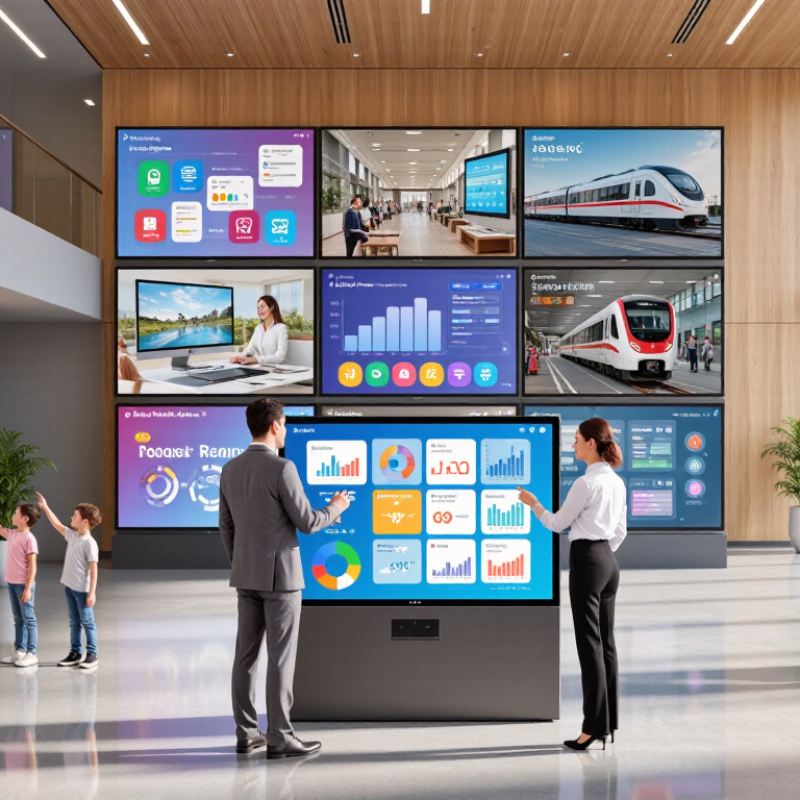
What Are Interactive Screens and How Are They Used in China?
Interactive screens combine a large display, touch input, speakers, and computing functions. In China, they appear in classrooms, meeting rooms, training centers, and public service offices. Users can write directly on documents, enlarge diagrams, share mobile screens, and save notes after a session. This makes information more visible and easier to discuss.
In schools, teachers use interactive screens for maps, experiments, language practice, and real-time quizzes. In companies, teams display production data, review designs, and connect with remote offices. Some factories also use them for equipment training, where clear diagrams can reduce misunderstandings.
From practical observation, screen size and brightness matter greatly in rooms with strong daylight. However, technology alone does not improve a lesson or meeting. I have seen attractive installations remain underused because the software felt complicated. That weakness deserves honest attention.
Tips:
Check touch accuracy before purchase. Test writing with both a finger and a pen. Confirm that common file formats open correctly. Plan cable routes carefully, especially near crowded desks. Train users with short, realistic exercises. Keep a backup method, such as printed instructions or a separate laptop. Reliable teams also review permissions, network stability, accessibility, and cleaning procedures. A few minutes of testing can prevent a silent room, frozen screen, or lost presentation.
Sometimes, simpler tools work better.
China’s Top 10 Interactive Screen Manufacturers
China’s top 10 interactive screen manufacturers are often compared through more than display size or touch response. In practical evaluations, I look at factory experience, panel consistency, software stability, and after-sales support. A bright screen may impress during a short demonstration. Long classroom use reveals more.
The strongest manufacturers usually offer capacitive or infrared touch technology, 4K resolution, anti-glare glass, and built-in computing options. Their production lines should include calibration stations, aging tests, and repeated touch testing. Certification records, quality management systems, and documented warranty procedures also matter. These details help separate dependable suppliers from companies focused only on attractive specifications.
Different manufacturers serve different environments. Some specialize in education, with pen tools, wireless casting, and lesson management software. Others focus on meeting rooms, where fast screen sharing and microphone integration are more important. Healthcare and public-sector projects may require stronger data controls and easier cleaning surfaces. I have found that installation guidance is often overlooked, especially for wall strength, cable routing, and ventilation. That mistake can reduce an otherwise excellent screen’s service life. Ranking the top ten is therefore not completely objective. Pricing, customization, export experience, and response time can change the order for each buyer. A careful comparison should include product samples, factory audit evidence, user feedback, and support performance after delivery.
China Top 10 Interactive Screen Manufacturers? - China’s Top 10 Interactive Screen Manufacturers
| No. |
Evaluation Dimension |
Manufacturer-Neutral Industry Benchmark |
Business Relevance |
Reference or Technical Basis |
| 1 |
Display Resolution |
4K UHD provides 3,840 × 2,160 pixels; 8K UHD provides 7,680 × 4,320 pixels. |
Higher resolution improves text clarity, detailed presentations, and digital signage quality. |
Consumer Technology Association 4K and 8K UHD definitions |
| 2 |
Touch Capability |
Professional interactive displays commonly support multi-touch input, with 10-point touch used as a practical evaluation baseline. |
Multi-user interaction supports collaborative teaching, workshops, and business meetings. |
Windows Precision Touch and HID multi-touch practices |
| 3 |
Video Connectivity |
HDMI 2.1 supports bandwidth up to 48 Gbit/s, enabling high-resolution and high-refresh-rate video configurations. |
Modern connectivity improves compatibility with computers, cameras, media players, and meeting systems. |
HDMI Specification 2.1 |
| 4 |
USB-C Functionality |
USB Power Delivery 3.1 defines power levels up to 240 W, while video and data functions depend on the supported USB-C mode. |
A capable USB-C port can reduce cable complexity for laptops and mobile workstations. |
USB Implementers Forum USB Power Delivery 3.1 |
| 5 |
Wireless Networking |
Wi-Fi 6 has a theoretical maximum aggregate data rate of up to 9.6 Gbit/s under specified conditions. |
Improved wireless performance benefits cloud collaboration, screen sharing, and online learning. |
IEEE 802.11ax specification |
| 6 |
Wired Network Interface |
Gigabit Ethernet provides a nominal data rate of 1,000 Mbit/s. |
A wired connection offers stable performance for managed corporate, education, and public-sector networks. |
IEEE 802.3ab Gigabit Ethernet |
| 7 |
Brightness and Viewing |
Brightness is measured in candelas per square metre (cd/m²), while viewing angle and contrast should be verified through product test reports. |
These factors affect readability in classrooms, meeting rooms, retail spaces, and bright environments. |
IEC display measurement practices |
| 8 |
Operating-System Compatibility |
Compatibility should be checked for Windows, macOS, Android, ChromeOS, and common casting protocols rather than assumed from the display size. |
Broad compatibility reduces integration costs and simplifies deployment across mixed-device environments. |
Operating-system and protocol documentation |
| 9 |
Safety and Compliance |
Market access may require applicable electrical, electromagnetic-compatibility, energy-efficiency, and regional conformity certifications. |
Verified compliance reduces regulatory, installation, and procurement risk. |
IEC, CE, FCC, RoHS, and applicable national requirements |
| 10 |
After-Sales and Lifecycle Support |
Evaluation should include warranty duration, spare-parts availability, firmware support, documentation, and service response procedures. |
Lifecycle support influences total cost of ownership more than initial purchase price alone. |
Procurement specifications and service-level agreements |
Note: The table presents manufacturer-neutral evaluation criteria and verified technical reference points without disclosing company or brand information.
Key Technologies and Product Differences Among Leading Brands
Interactive screen manufacturers now compete through engineering details, not panel size alone. MarketsandMarkets’ 2023 Interactive Display Market report valued the sector at approximately $14.7 billion. It forecasts growth to $26.5 billion by 2028, with a 12.5% compound annual growth rate. That expansion increases pressure on touch accuracy, software stability, and service support.
Leading products differ in their touch architecture. Infrared systems usually support large panels and multiple simultaneous users. Capacitive systems can provide smoother writing but often cost more. Zero-bonded displays reduce parallax between the pen tip and image. This matters during small handwriting tasks. A 4K panel is common, yet resolution alone proves little. Brightness, anti-glare treatment, viewing angle, and glass durability affect daily classroom use more visibly.
Processing design creates another separation. Some screens use integrated Android systems, while others add Windows computing modules. Integrated systems simplify deployment. Windows modules usually support broader professional software. According to IDC’s Worldwide Quarterly Collaborative Devices Tracker, demand depends increasingly on hybrid collaboration and device manageability. Remote updates, user authentication, USB-C connectivity, and centralized monitoring therefore deserve serious testing. Latency matters. In practical evaluations, a claimed 8-millisecond response can feel slower when the writing layer, operating system, and application process data separately. Specification sheets can mislead. Buyers should test palm rejection, microphone pickup, camera framing, and heat after extended operation. The least glamorous details often decide reliability.
How to Choose the Right Chinese Interactive Screen Manufacturer
China Top 10 Interactive Screen Manufacturers?
Choosing the right Chinese interactive screen manufacturer requires more than comparing prices. Begin by checking factory experience, production capacity, and quality-control procedures. Request a recent factory video or arrange an independent audit when possible. A reliable supplier should explain panel sourcing, touch technology, software compatibility, and repair processes clearly.
Ask for a working sample before placing a bulk order. Test writing accuracy, palm rejection, viewing angles, speaker clarity, and screen brightness in a real classroom or meeting room. Check performance after several hours of continuous use. No checklist is perfect. Even an impressive sample may not represent every production batch. Request inspection records, warranty terms, spare-part availability, and response times in writing. Certifications should match your target market and product configuration.
Tips:
Compare at least three suppliers using the same requirements. Confirm minimum order quantities, packaging details, delivery schedules, and payment conditions. Ask whether the manufacturer supports customized logos, ports, mounting systems, or firmware settings. A lower quote can hide weaker components or limited technical support. Contact existing business customers if the supplier permits it. Their comments may reveal delayed updates, uneven quality, or excellent after-sales service. Keep every promise in a signed document, because informal assurances are easy to misunderstand.

















 Screen Size Calculator